I made the mistake with our first child's room of buying a themed ceiling fixture — little stars punched into the metal shade. She loved it at five. At eight she was embarrassed by it. At ten she refused to have friends over to a room with a starfish light.
For both kids' rooms in our Denver house, I went deliberately age-neutral.
The Ceiling Fixtures
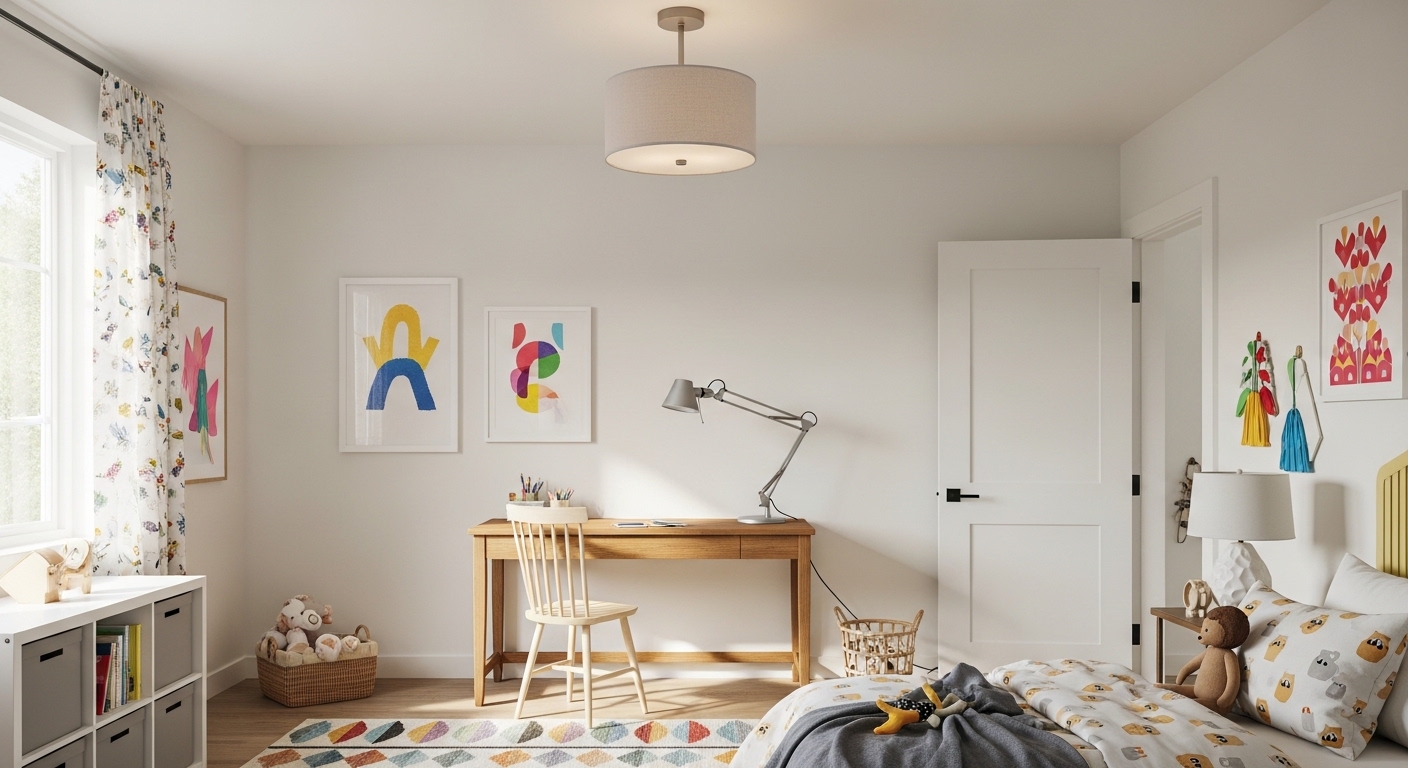
Both rooms got matching brushed nickel semi-flush mounts with frosted white glass shades on dimmers. They look like fixtures chosen for the room. They don't look like fixtures chosen for a five-year-old. When my kids are fifteen, they'll still work.
The Bedside Sconces
Each child has a plug-in sconce at their bedside, on a switch they control. My 9-year-old reads before bed; his sconce is on every night until 9 p.m. My 6-year-old needs dark to sleep; hers goes off at 7:30. They control their own lights. The novelty of that responsibility has reduced bedtime resistance more than I expected.
The Nightlight
Both rooms have an amber nightlight (1800K) in the outlet nearest the door — for middle-of-the-night navigation. Warm enough to not disrupt sleep, bright enough to see by. No blue light in either room after 7:30 p.m. Both kids sleep through the night consistently.
Frequently Asked Questions
What ceiling light is best for a child's bedroom?
A dimmable flush or semi-flush mount with a frosted diffuser is the most practical and age-agnostic choice. Avoid novelty shapes, themed fixtures, or anything with an exposed bulb at accessible height. A brushed nickel or white semi-flush with a frosted glass shade looks appropriate at age 4 and still works at 16. Spend more on a quality, classic fixture once rather than replacing a trendy one in three years.
What nightlight is best for a child's room?
A warm amber or red nightlight (1800–2000K) causes the least sleep disruption because it doesn't suppress melatonin the way blue-spectrum white light does. Plug-in nightlights with auto dusk-to-dawn sensors work well — they come on at dark and off at daylight without any action required. For older kids who want to control their own light, a bedside plug-in sconce on a switch they can reach is a better solution than a floor-level nightlight.
How do you light a shared kids bedroom?
Individual light control for each child is the priority — a ceiling fixture on a dimmer plus individual bedside sconces each child controls independently. The overhead handles homework and play; the bedside handles reading without disturbing the other child. Mount bedside sconces high enough that they're out of reach (6+ feet) and direct light down and away from the sleeping child across the room.