Our living room had one central overhead fixture when we moved in. At full brightness it lit the room like a gymnasium. Turned off, the room was dark. There was no in-between. This is not how a living room should work.
The Plan: Three Layers, Five Sources
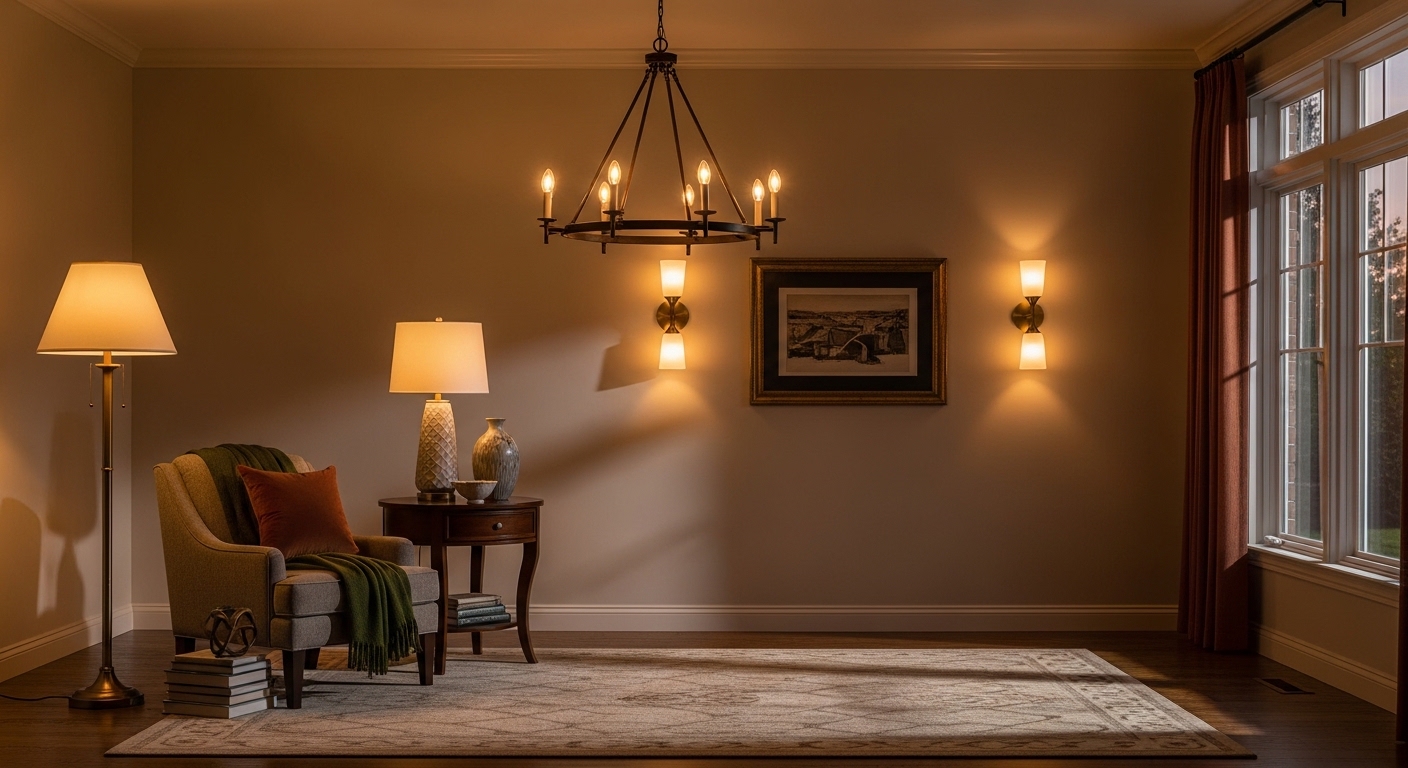
Ambient: existing overhead fixture on a dimmer. Accent: two plug-in wall sconces flanking the fireplace on a smart plug. Task: a floor lamp beside the reading chair. Decorative: two small table lamps on the bookshelves. That's five sources, three layers, complete control.
The Cost
Dimmer for overhead: $18. Two plug-in sconces: $86. Smart plug: $12. Floor lamp (thrifted): $0. Two table lamp bases (thrifted): $6. Total: $122 plus thrift luck.
The Modes
Full day: all five sources. Relaxed evening: sconces plus floor lamp, overhead off. Movie night: sconces only at 20%. Reading: floor lamp plus overhead at 30%. The same room now has five genuinely different experiences. The single overhead fixture offered exactly one.
Frequently Asked Questions
What is layered lighting in a living room?
Layered lighting uses three types of light in one room: ambient (general overhead light that fills the room), task (directed light for reading or specific activities), and accent (decorative light that creates mood and highlights features). A properly layered living room has independent control over each layer — typically three separate switches or smart controls. The result is a room that functions at multiple light levels for different uses throughout the day.
How many light sources does a living room need?
A 200–300 sq ft living room benefits from 4–6 light sources across all three layers. A typical arrangement: one overhead fixture (ambient), two flanking sconces or a floor lamp (accent), and one or two table lamps or a reading lamp (task). Having more fixtures at lower individual brightness is more comfortable and flexible than one very bright overhead fixture.
What is the best living room lighting for watching TV?
Turn off overhead lights entirely for TV viewing — they cause glare on the screen and reduce apparent contrast. Keep one low accent source on behind or beside the TV to reduce the contrast between the bright screen and a completely dark room. This is called bias lighting and reduces eye strain significantly. A smart bulb set to 10% warm white in a sconce beside the TV is ideal.