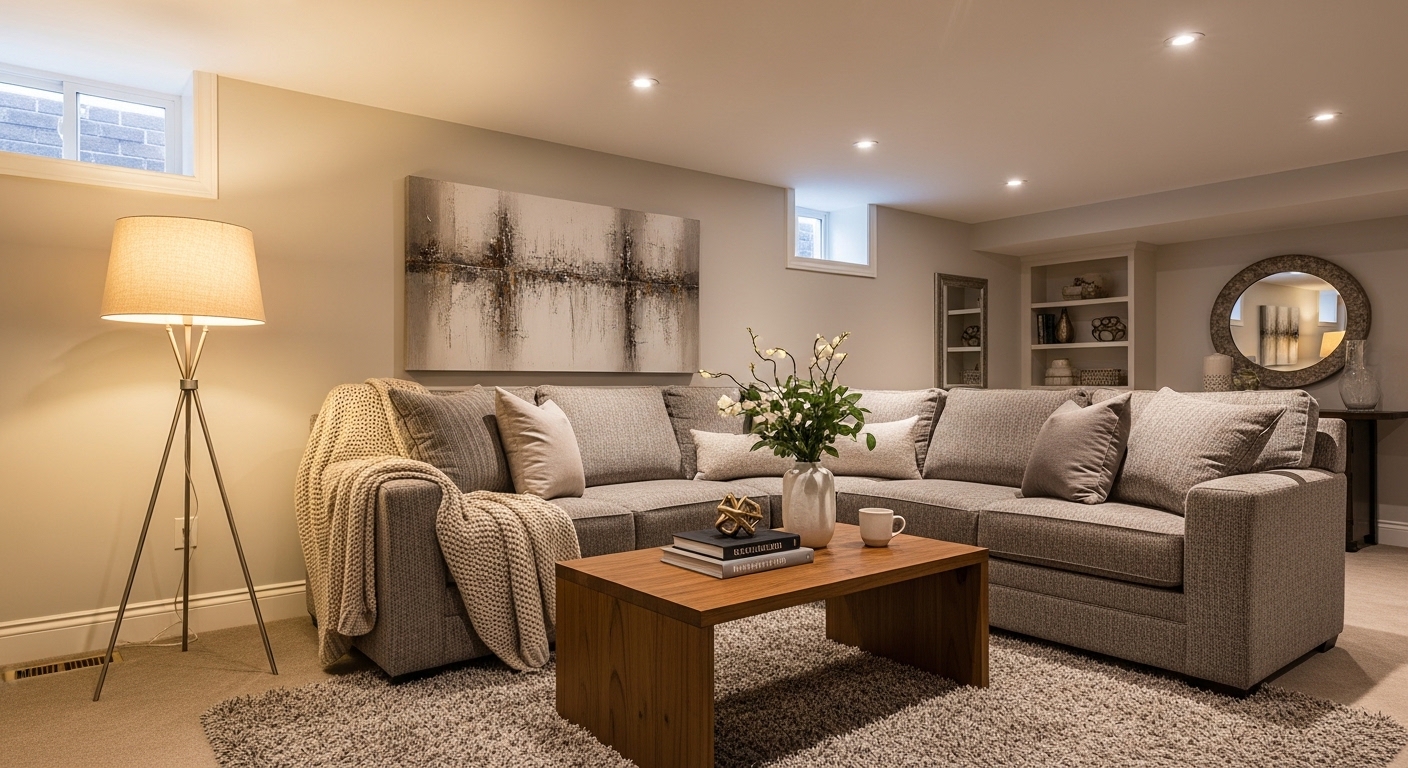
Our basement had four 4-foot fluorescent tube fixtures, bare concrete walls, and a drop ceiling. It looked exactly like a 1985 rec room. We use it as a playroom, a workout space, and an overflow living room. It deserved better light.
The Fluorescent Fixtures Had to Go
I replaced all four with LED flush mounts — two 18-inch fixtures for the main space, two smaller ones for the laundry corner and storage area. All at 3000K warm white. The drop ceiling tiles went up two shades warmer in color; the space felt twice as large.
The Accent Layer
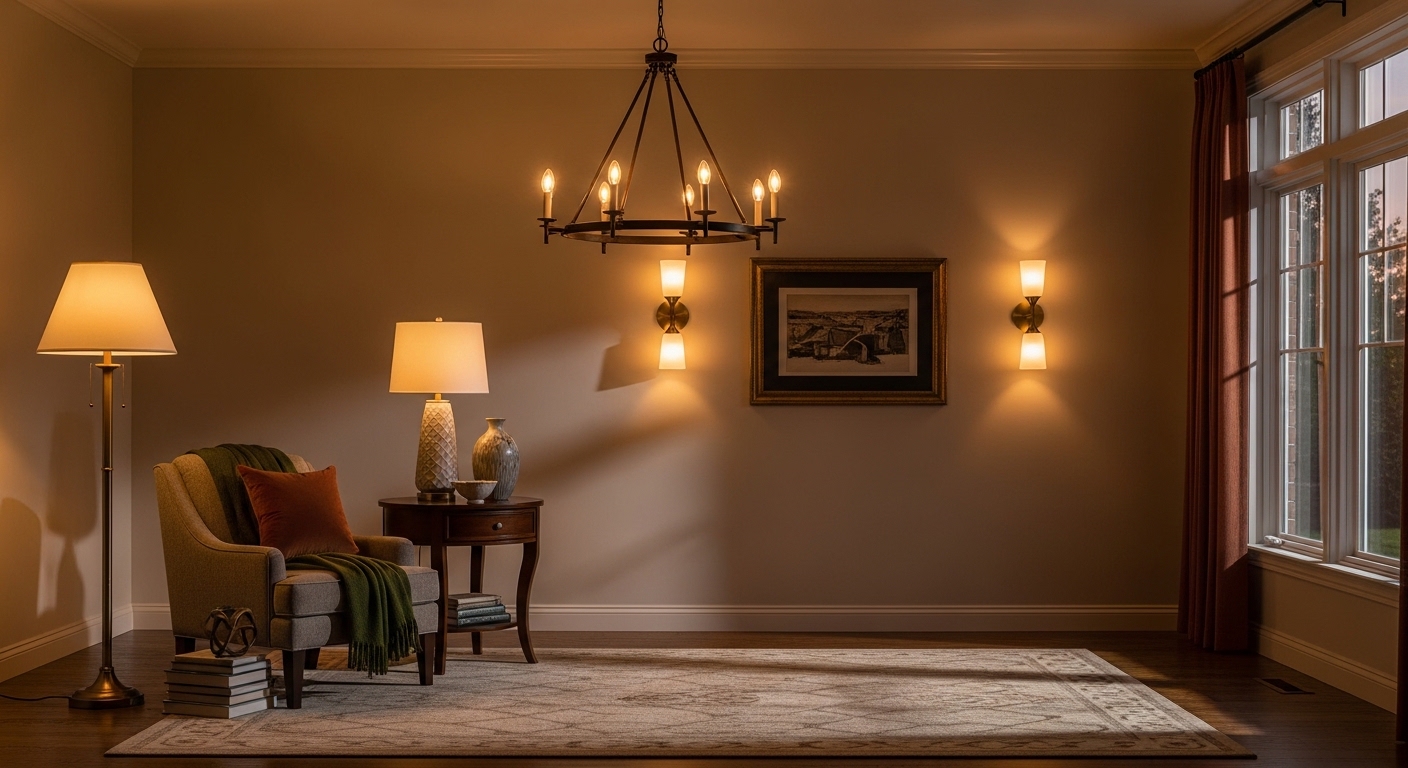
Two plug-in wall sconces at 66 inches on the main wall flanking the TV — this was the change that made the basement feel like a room rather than a storage area with seating. Vertical light at eye level changes the perceived ceiling height and adds warmth that overhead-only light never provides.
The Dimmer
All four overhead fixtures are on a single dimmer. Workout mode: 100%. Movie mode: 30% overhead plus sconces. Kid play mode: 70%. The basement is now the second most-used room in the house. Lighting was the primary reason it wasn't before.
Frequently Asked Questions
How do you make a basement feel less like a basement?
Lighting is the primary driver of that 'basement feel' — the combination of low ceilings and overhead-only fluorescent lighting creates a harsh, institutional atmosphere. Replace fluorescent fixtures with warm LED flush mounts (2700K) on dimmers, add plug-in wall sconces at eye level to create vertical interest, and use a floor lamp in any corner the ceiling fixtures don't reach well. These three changes remove 80% of what makes a basement feel like a basement.
What type of ceiling light is best for a low basement ceiling?
Flush mount fixtures (not semi-flush) are essential in basements with 7.5-foot or lower ceilings — any hanging element reduces clearance and makes the ceiling feel lower. LED flush mounts with a wide light distribution angle illuminate the room without requiring a pendant to drop the fixture lower. Choose large-diameter flush mounts (14–18 inches) that spread light widely rather than small fixtures that create pools of light with dark gaps between.
How do you add natural light to a basement with no windows?
You can't add true natural light, but you can simulate it with daylight-spectrum LED panels (5000K) that mimic natural light color and full-spectrum bulbs that include all wavelengths of the visible spectrum. Strategically placed mirrors reflect light and make the space feel larger and brighter. Light-colored walls and floors (white, cream, light gray) bounce light around the room and maximize the impact of any artificial source.