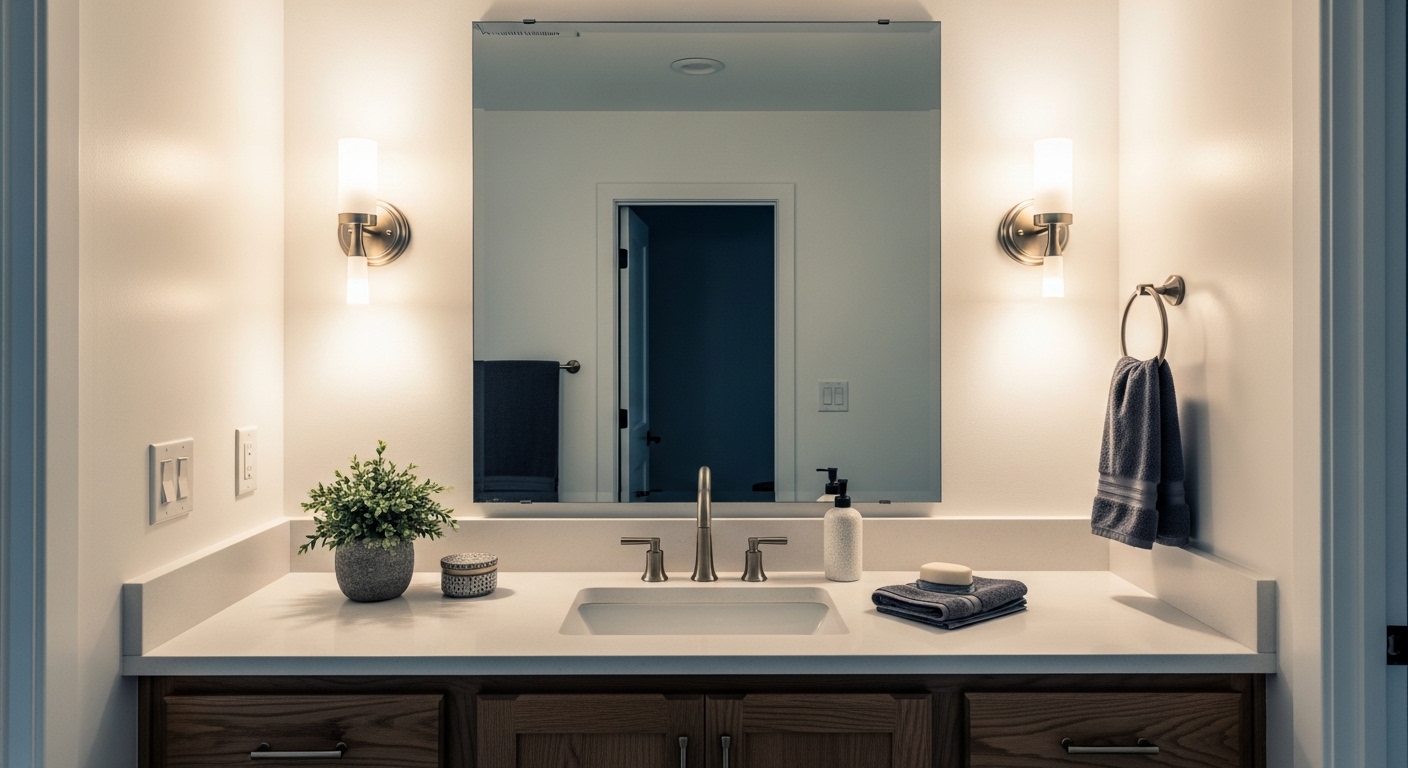
I wanted side-mounted sconces flanking my bathroom mirror. The existing overhead vanity box was above the mirror — where I didn't want it. Adding side sconces meant new boxes and new wire. I decided to run it myself rather than pay an electrician.
The Plan
Run wire from the existing overhead box down through the wall cavity to two new boxes at 62 inches on either side of the mirror. The overhead box becomes a junction box, splitting power to both new sconces. The overhead light goes away entirely.
The Work (6 Hours Total)
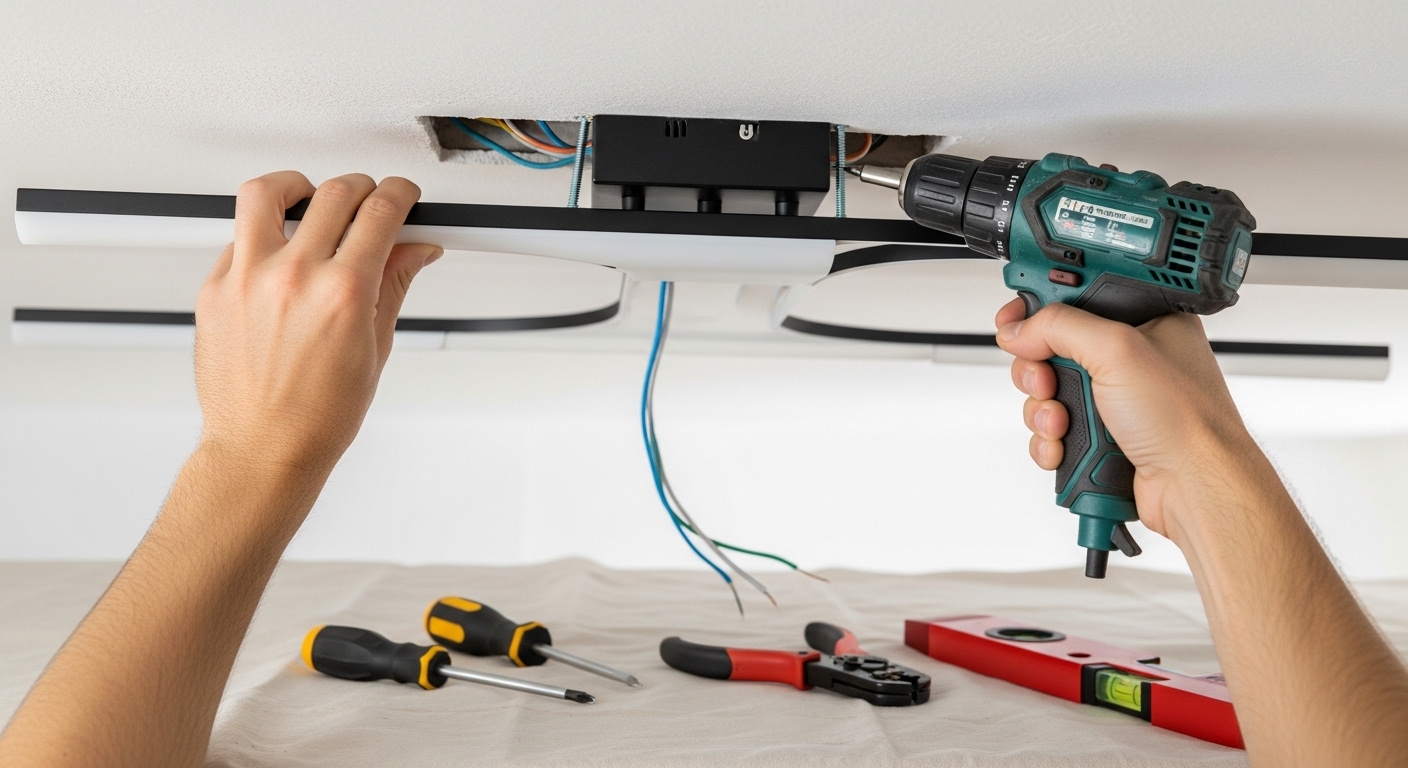
I cut power, opened the ceiling where I could (we have an accessible attic above the bathroom), fed cable from the overhead box to each new box location through the wall, used a fish tape to pull wire through where direct access wasn't possible. Cut drywall for the two new boxes, installed, connected wire. Patched drywall. Two coats of joint compound. Sanded. Painted. Installed sconces.
Materials Cost
Two boxes: $8. Two feet of 14/2 cable: $6. Wire nuts, staples, screws: $8. Drywall patch kit: $12. Paint: already owned. Total: $34 in materials. The two sconces were $95 for the pair. Electrician quote for the same work: $285. Savings: $251.
Frequently Asked Questions
How do you add bathroom sconces where there is no outlet?
If the existing vanity light box is above the mirror, you can run wire from that box down through the wall cavity to new boxes on each side of the mirror. Turn off the circuit, open the existing box, run 14/2 cable (for a 15A circuit) or 12/2 (for 20A) through the wall to each new box location, connect to the existing circuit at the overhead box, and mount new boxes at the side locations. Each new sconce then wires to its new box.
Do bathroom vanity lights need a GFCI circuit?
Yes — bathroom lighting must be on a circuit with GFCI protection in most jurisdictions (NEC 210.8). This typically means the bathroom circuit already has a GFCI outlet that protects the whole circuit. Check that your GFCI outlet's 'Test' button resets the circuit to confirm protection extends to the vanity light box before adding new sconce locations.
Can I do my own bathroom wiring?
In most US states, homeowners can legally do their own electrical work on their primary residence. Permits may be required for new circuits or boxes — check your local building department. Work adding to an existing circuit (not a new circuit from the panel) is typically lower risk and may not require a permit. When in doubt, pull the permit — inspectors find problems before they become fires.