Building a DIY Wood Lamp Shade: A Weekend Project
DIY Projects

Building a DIY Wood Lamp Shade: A Weekend Project

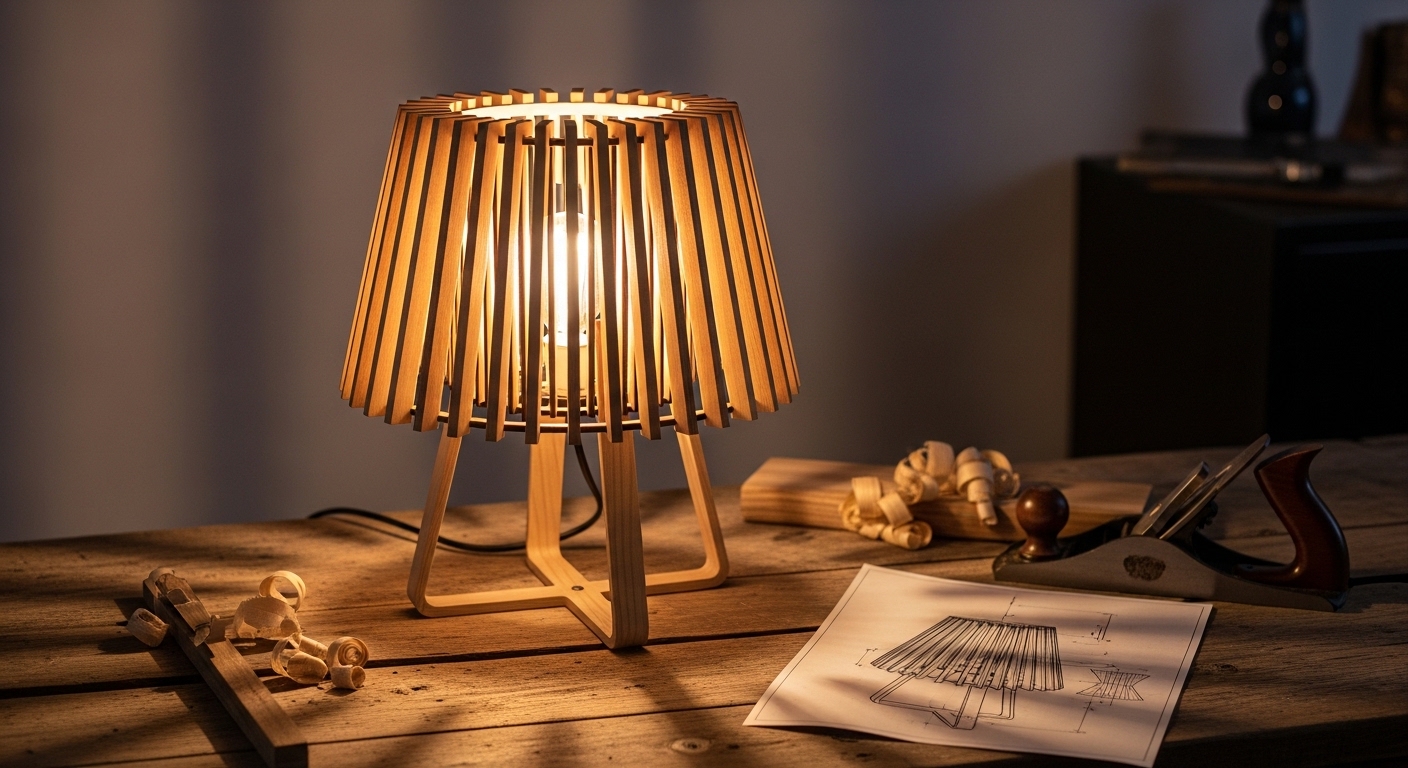
I found a geometric wood pendant I loved at a boutique home store. The price was $295. I looked at it for ten minutes, decided I could build it, and went home. Six hours later I had an almost identical pendant for $40.

The Design

An open rectangular frame in natural walnut — four vertical sides of 1/4-inch walnut strips, joined at the top and bottom with dowels. Simple, geometric, allows light to project through the frame in interesting patterns on the ceiling. The pendant cord set hangs through the center of the top frame.

The Build ($22 in wood + $18 in cord set)

Cut strips to length, sand smooth. Drill half-inch holes at the top corners for the mounting wires. Join corners with wood glue and small dowels. Let dry 24 hours in clamps. Apply one coat of danish oil. Wire the UL-listed pendant cord set through the center — socket hangs 4 inches below the top frame, bulb has 3 inches of clearance from the bottom frame. A globe LED at 2700K gives beautiful diffused light through the open frame.

The Result

It's been up for eight months. It gets more compliments than anything else in our dining room. Cost: $40. Time: one Saturday. The $295 version is still at the boutique, for all I know.

Frequently Asked Questions

Is it safe to build your own light fixture?

Yes, with appropriate materials and proper wiring. Use a UL-listed pendant cord set (available at hardware stores for $12–$20) rather than sourcing raw wire — the cord set includes pre-tested wire, a socket, and a canopy. Pair with a UL-listed bulb at or below the socket's wattage rating. The structural shade component (wood, rattan, fabric) doesn't need to be rated as long as it doesn't contact the socket or bulb.

What wood can you use for a lamp shade?

Any wood that won't be in contact with the bulb or socket is safe — the shade structure just needs to be at a distance from heat. Thin hardwood veneer, balsa, plywood strips, and natural wood dowels all work well for geometric pendant designs. Avoid softwoods near the bulb that might absorb heat. Keep at least 2 inches of clearance between the bulb and any wood element.

How do you attach a shade to a pendant cord?

The most common method is a spider fitting — a metal plate with a center hole for the socket and radiating arms that attach to the shade rim. Spider fittings cost $5–$10 and fit most standard pendant cord sets. For geometric open-frame shades, the frame itself can be wired to hang from the socket housing using small wire or chain at each upper corner.