I work from home full-time. For the first year, I had my desk in a room with one overhead fixture that I ran at full brightness all day. By 3 p.m. my eyes hurt. By 4 p.m. I had a headache. I assumed it was screen time. It was mostly lighting.
The Problems I Had
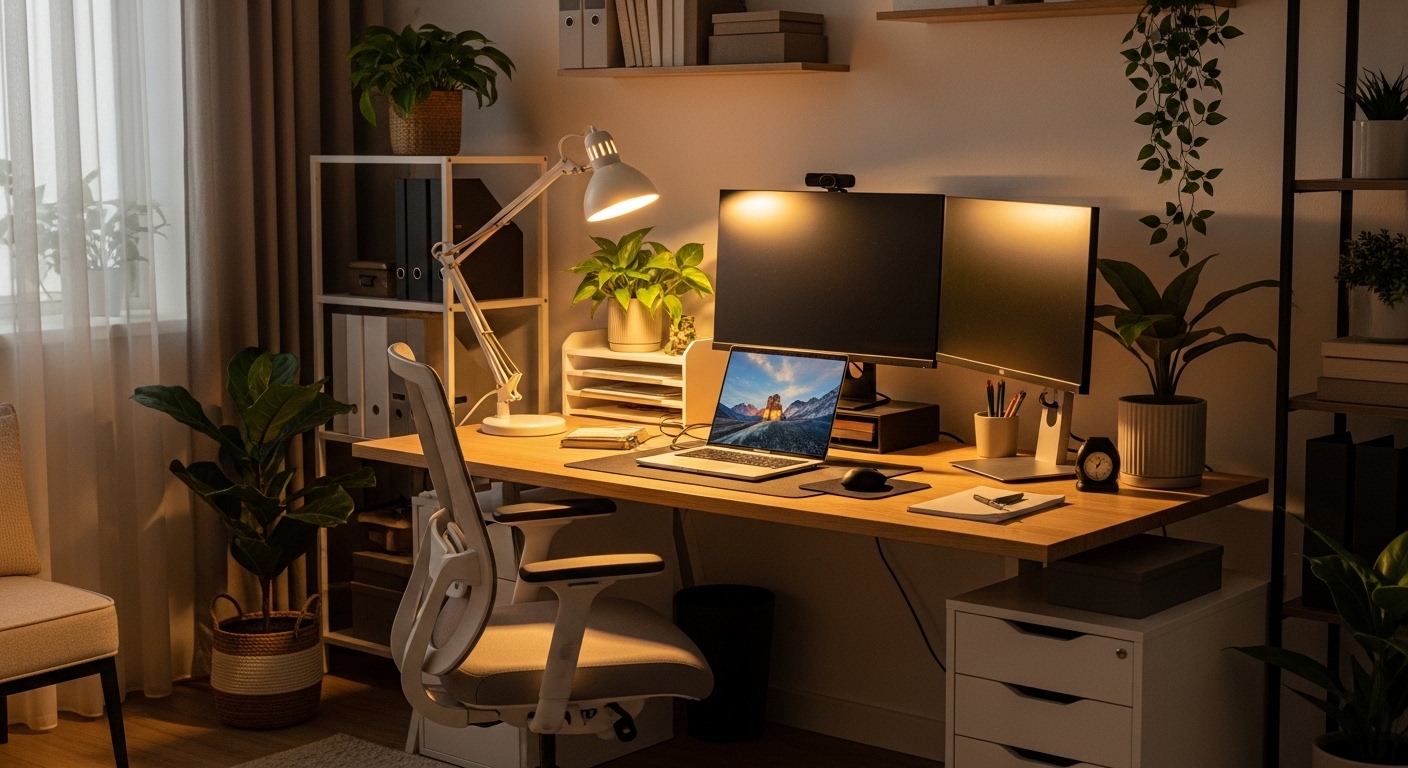
One overhead fixture directly above and behind my monitor created glare on my screen. The bright overhead made the room bright but my task area (the actual desk surface) was often in shadow from my body. No bias lighting meant my screen was the brightest thing in my field of vision by afternoon.
The Fixes
A wall sconce to the left of my monitor provides task lighting on the desk surface without overhead shadow. A warm LED strip behind the monitor handles bias lighting. The overhead fixture is now on a dimmer and runs at 50% — enough ambient, not enough to cause screen glare. Total spend: $67.
The Result
The 3 p.m. headaches stopped within a week. I thought they were inevitable parts of working at a computer. They were caused by the lighting setup around my computer. One afternoon of fixture work and $67 eliminated a daily quality-of-life problem I'd accepted for over a year.
Frequently Asked Questions
What is the best lighting for a home office?
Layer three sources: ambient overhead (on a dimmer, 3000–4000K for focus), a task light positioned to illuminate the desk surface without casting shadows from your writing hand, and bias lighting behind your monitor (a warm LED strip at 6500K reduces eye strain by reducing the contrast between the bright screen and a dark room). Keep overhead brightness high enough that the monitor doesn't dominate the room's brightness, but not so high that it causes screen glare.
How do you reduce eye strain from computer screens?
Match the room's ambient brightness to the screen brightness — a screen in a dark room creates extreme contrast that fatigues eyes faster. Add a warm LED strip behind the monitor (bias lighting). Position overhead lights to the side rather than directly above and behind the screen to prevent glare. Take a 20-20-20 break every 20 minutes: look at something 20 feet away for 20 seconds. Lighting helps, but breaks matter too.
Where should a desk lamp be positioned?
Position a desk lamp so the light source is slightly above and to the left of your work surface (or right, if left-handed). This illuminates the work surface without the lamp or your hand casting a shadow over what you're writing or reading. The lamp base should be on the opposite side of your dominant hand — right-handers put the lamp to the left, left-handers to the right.