When we moved in, our kitchen had one circuit controlling one overhead fixture. That fixture was a 60-watt equivalent flush mount. In a 14x16 kitchen that we cook three meals a day in, this was grossly inadequate.
Over two years I built out all four kitchen lighting zones. Here's each one.
Zone 1: Island Pendants ($135)
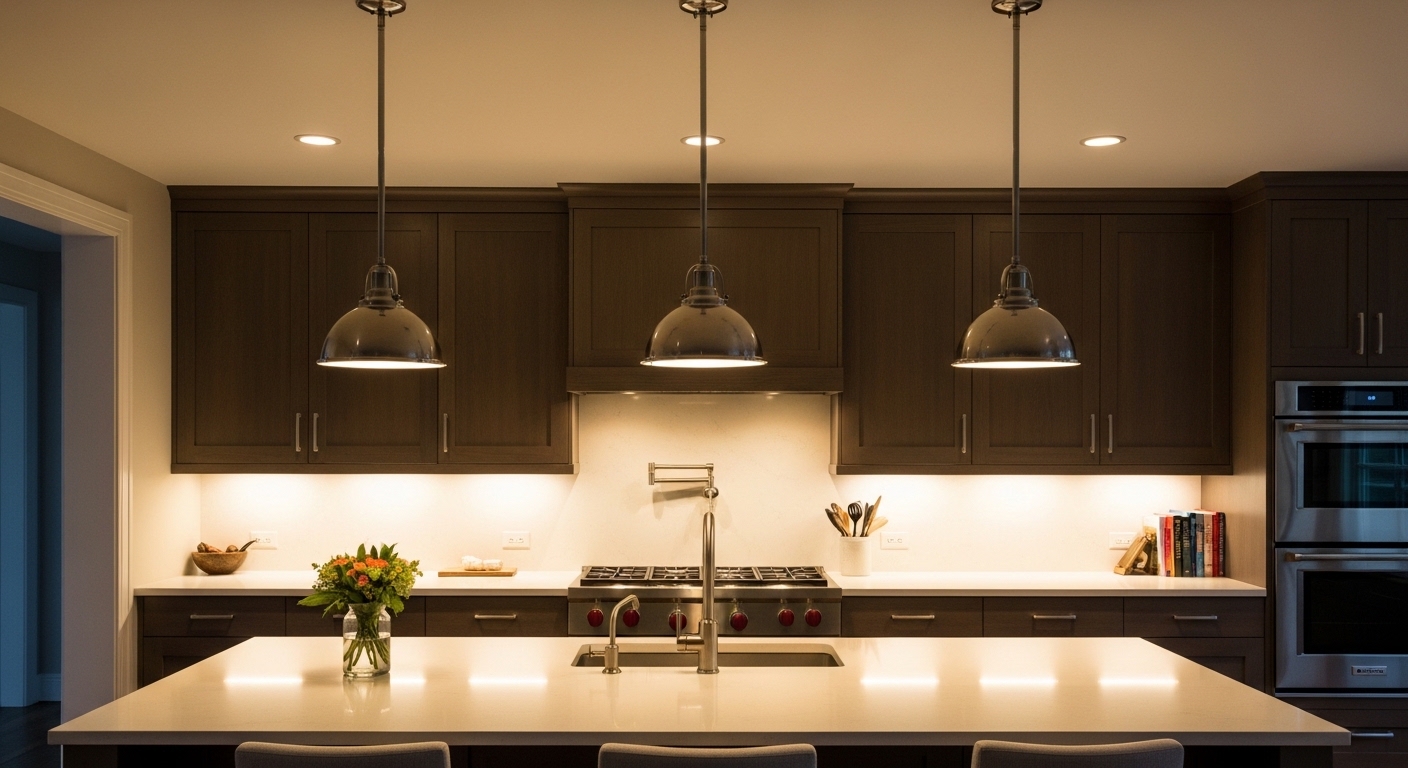
Two black cage pendants over the island on a dedicated dimmer. This is the focal point and the most-used task surface. Priority one.
Zone 2: Perimeter Overhead ($0)
The existing flush mount stayed but got a new dimmer switch and a 1400-lumen 3000K bulb replacing the original cool-white 60W equivalent. Same fixture, dramatically better light.
Zone 3: Under-Cabinet ($38)
LED strips under all three upper cabinet runs, plugged into the outlet inside the upper cabinet. Illuminates the entire prep surface.
Zone 4: Sink Area ($42)
A small recessed-look surface mount directly above the sink, on the same circuit as the overhead. The sink was in a shadow pocket that made washing dishes in the evening unpleasant. The dedicated fixture over it fixed that completely.
Frequently Asked Questions
How many light circuits does a kitchen need?
For a well-lit, flexible kitchen, three circuits are ideal: island pendants (controlled independently from overhead), overhead ambient (the ceiling fixture or recessed lights), and under-cabinet strips. With three circuits on three dimmers, you can run full brightness for cooking, island-plus-under-cabinet for prep, or overhead-only for general use. Most kitchens have one or two circuits — adding the third (usually for pendants or under-cabinet) is the most impactful electrical upgrade.
What color temperature is best for kitchen lighting?
3000K–3500K works well for kitchens — warm enough to be comfortable during family meals but bright enough for food prep and accurate color rendering. Under-cabinet strips at 3000K improve food color accuracy (important for judging doneness). If you cook a lot and want the most functional lighting, choose 3500K throughout. If the kitchen is also a gathering space, 3000K is more comfortable for evening use.
How do you light above kitchen cabinets?
LED strip lights laid on top of upper cabinets create an indirect uplighting effect that makes the ceiling appear higher and adds a warm glow to the room without adding a visible fixture. Use 2700K warm white strips — the indirect, bounced light should be warmer than task lighting. Connect to a smart plug so it can be set to come on at dusk automatically. This is a $30 project with an elegant, professional-looking result.