We wanted bedside sconces on both sides of our bed. Our bedroom had one outlet on the right side of the room, positioned perfectly for my husband's side. My side had nothing within 8 feet of the sconce location.
We solved it three ways — one per side.
His Side: Standard Plug-In Sconce
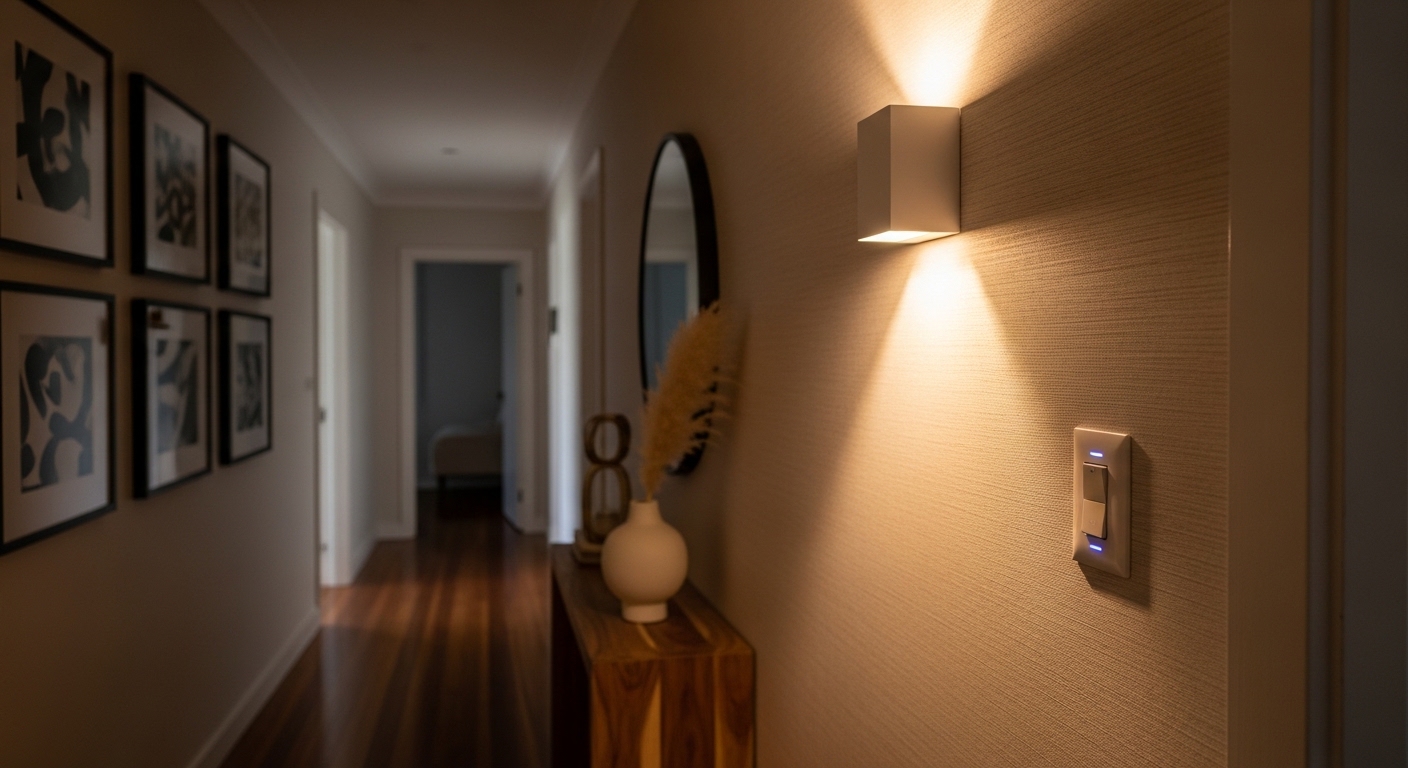
A plug-in wall sconce mounted at 62 inches, cord running straight down in a white cord cover to the baseboard, then three feet along the baseboard to the outlet. Invisible when painted. On a smart plug for voice control.
My Side: Outlet-in-Wall Solution
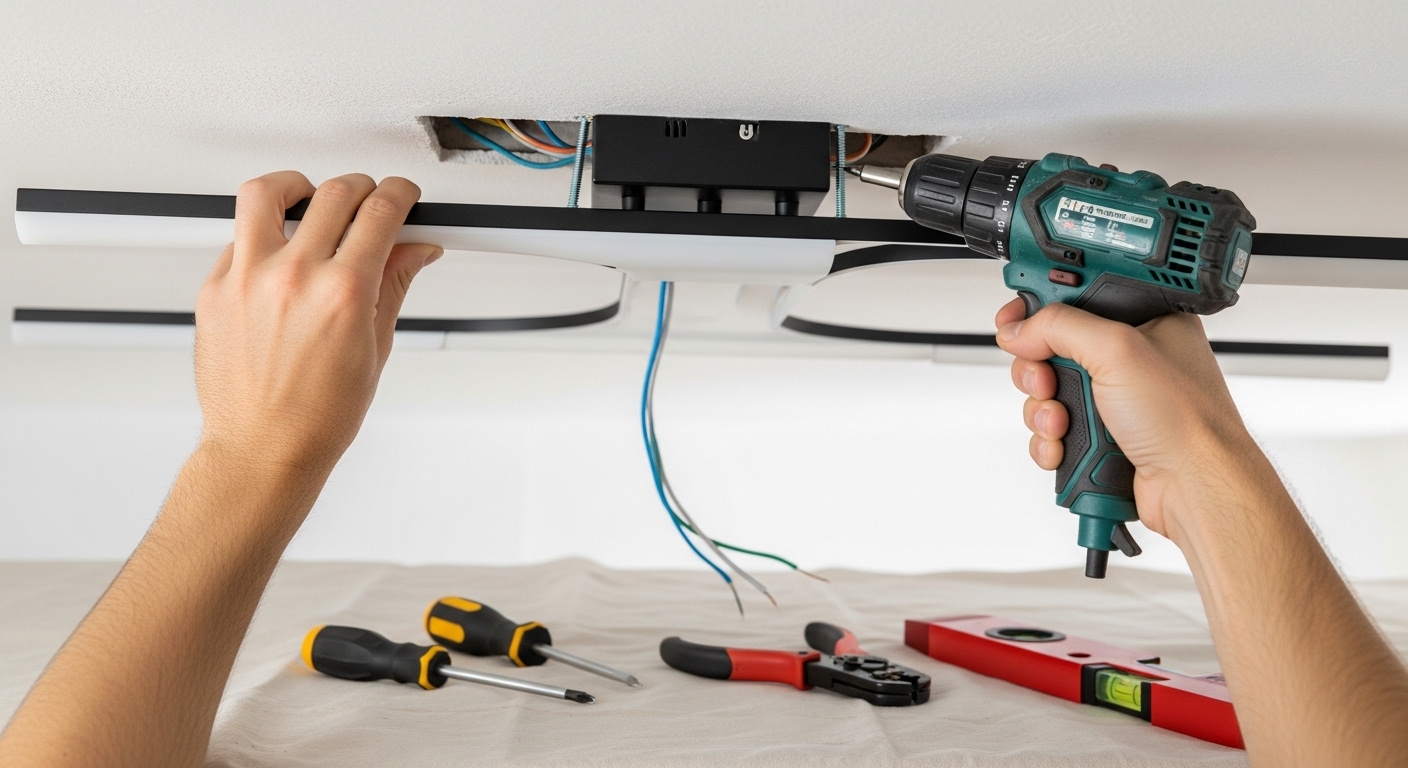
I paid an electrician $95 to add a single outlet behind my nightstand location, tapped from the existing circuit. The sconce on my side plugs directly in — no cord cover, no visible cord. The cleanest possible installation. Worth every dollar of the $95 because I look at this every morning and evening.
The Combined Result
Two matching sconces, both look hardwired, both independently switchable via smart plugs, no cords visible. The bedroom went from "has two nightstand lamps" to "looks like a designed primary bedroom." The cost difference between the two sides was $95 — I'd spend it again for the cleaner look on my side every time.
Frequently Asked Questions
How do you add a wall sconce without an outlet nearby?
Three options from easiest to hardest: (1) Use a battery-powered or rechargeable plug-in sconce that doesn't need an outlet at all. (2) Run a cord from a distant outlet along the baseboard in a cord cover to the sconce location. (3) Have an electrician add an outlet in the wall behind the sconce location, which provides the cleanest result. For most rental situations and budget renovations, option 1 or 2 is the right answer.
Can you share one outlet for two bedside lamps?
Yes — a slim two-outlet adapter behind the nightstand splits one outlet into two without a power strip visible on the floor. For plug-in sconces, run one cord down each side of the bed in a cord cover to a shared outlet at the baseboard, using an outlet splitter or a small power strip tucked behind the bed. Smart plugs allow both sconces to be controlled by one switch or phone.
How far can you run a cord cover on a wall?
There's no technical limit — cord covers come in 5-foot sections that connect end to end. The practical limit is aesthetics: a cord cover running more than 8–10 feet across a wall starts to be noticeable even when painted. For runs longer than 10 feet, consider whether running the cord along the baseboard (where it's less visible) or adding an outlet is a better solution.