The best paint colors for a living room in a historic house are the ones that survive the room's light at three times of day, and the only way to find one is a large sample on the actual wall for a week, which I know and have known for years and still painted three walls before I learned it again. We painted this room three times, three gallons and about $200 in sample pots, before the fourth color, a soft warm sage with an undertone that pulls toward yellow in direct light and toward brown in shadow, went on and has stayed for eight months without a single wish that it were different. This post is the four rounds and what each one taught, the warm white that read lavender, the sage that became a hospital corridor with the furniture back, the navy my husband found oppressive, the fourth color and its undertone, why historic rooms with tall windows change color so much through the day, the direction the room faces and what it does, the woodwork as the fixed reference, sorting the light before the color, the sconces that changed how the color reads at night, the sample method in detail, the finish, the ceiling and the trim, the mistakes, and the cost.
Round one: the warm white
A warm white that read lavender in afternoon light, because the room faces a direction that pulls cool and a white with a hint of red in it goes purple under cool light; it looked perfect on the chip and in the morning and wrong from 3 pm until the lamps came on. Two coats, a week of pretending, and the first lesson: a white in a room with tall windows is a color that changes more than any other, because it has nothing of its own to hold onto.
Round two: the sage
A sage green that looked right on the bare walls and like a hospital corridor once the furniture was back, because a grey-green with no warmth in it, against a linen settee and heart pine, reads as institutional; the room without furniture is a different room and the color was judged in the wrong one. Lesson two: sample with the furniture in, or at least with a chair and the rug's corner pushed against the sample.
Round three: the navy
A deep navy that I still think was lovely and that my husband found oppressive, which in a room two people share is a veto; by day it was a color and by night, under the sconces, it was a wall that came toward you. It taught me that a dark color in a living room needs more light than we had at the time, which is the sunroom's lesson applied where we had not yet added the lamps, and that a color one person loves and the other cannot sit in is the wrong color whatever the chip says.
Round four: the color I should have started with
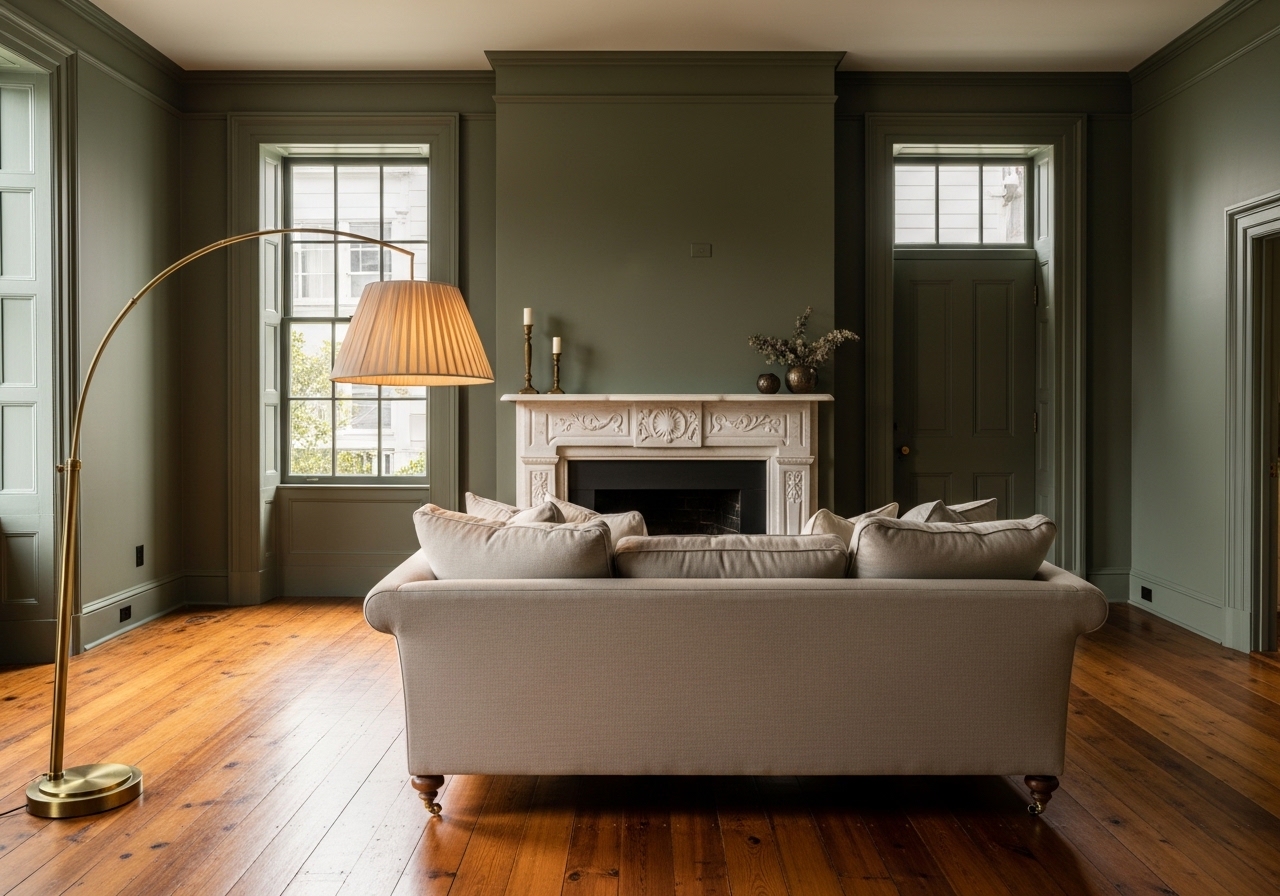
A soft, warm sage, not grey-green, not mint, not the flat institutional green of round two; the key is the undertone, which pulls toward yellow in direct light and toward brown in shadow, so it shifts through the day in a way that feels alive and never goes cold. It has been on the walls eight months and I have not once wished it were different, which for a room I had painted three times is the review. It is the color the woodwork wanted, which is the next section.
Why historic rooms change color so much
Tall windows with wavy glass let in a great deal of light from a low angle, and the light changes character from morning to afternoon more than a modern room's does; a shade that looked warm at noon read lavender by evening, and the plaster's slight texture takes shadow at the top of the wall where a flat drywall does not. A color in an old room is three colors a day, and the sample has to be looked at at all three. The window post is the glass; this is what it does to the walls.
The direction the room faces
Our living room faces a direction that pulls cool, and warm whites and soft warm neutrals held up where cooler shades went grey; a north- or east-facing room in this climate wants a color with yellow or brown in it, and a south- or west-facing one can take a cooler shade because the light warms it. The room's compass point is the first thing to know before opening a fan deck, and it is the thing the chip cannot tell you.
The woodwork as the fixed reference
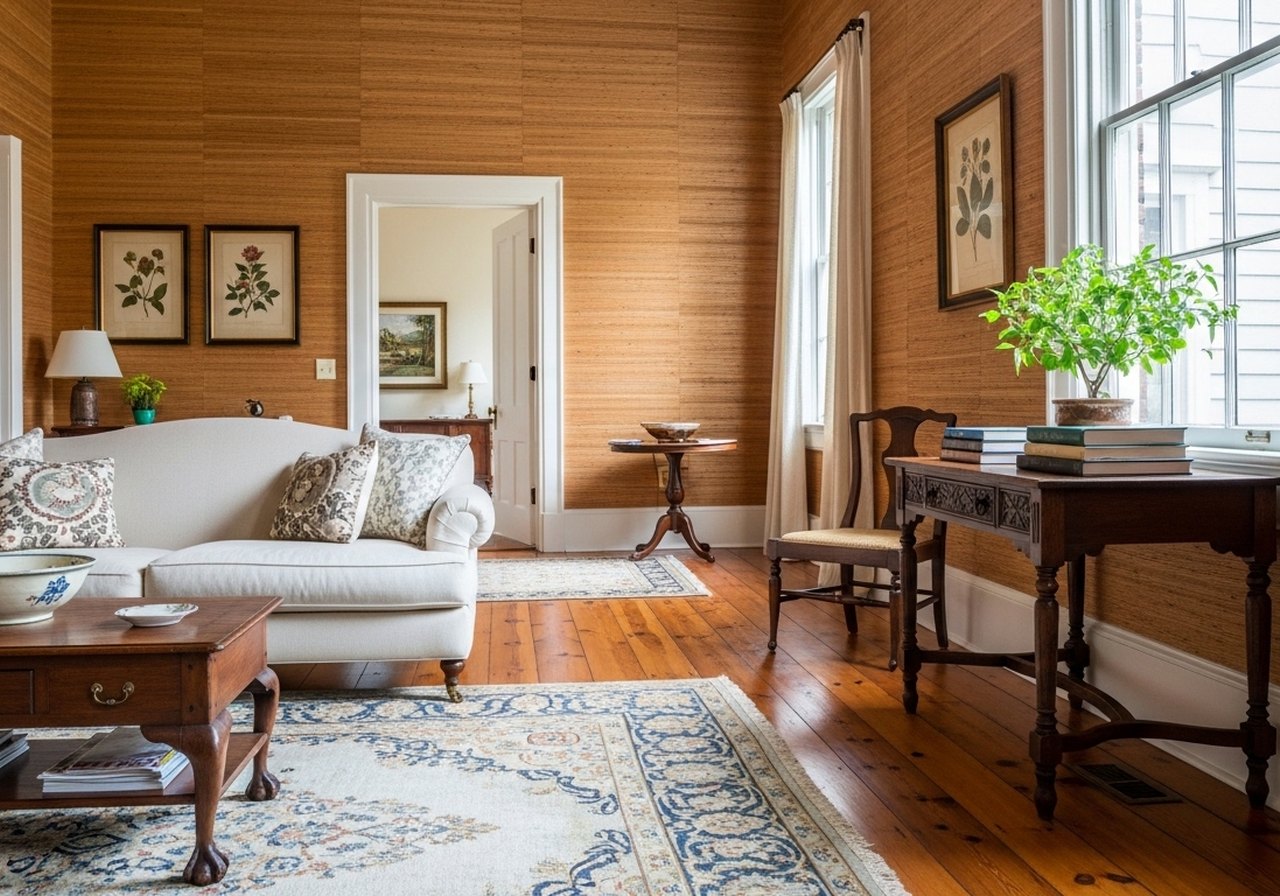
The original heart pine floor and the stripped wainscot in the entry are the house's fixed colors, and a wall color was chosen to flatter them rather than to be looked at on its own; the sage's brown undertone is the floor's undertone, and the two agree where the navy and the grey-green argued. In a house with original wood, the wood is the first color in the room and the paint is the second, and a paint chosen without the wood in view is a paint chosen for a different house.
Light first, then color
Because paint reads under whatever light you add, we sorted the warm lighting first so the color was judged under the light we actually live with; the fourth color was sampled with the new sconces on at 40 percent at 9 pm and the lamps at their evening level, and the first three were sampled under a ceiling fixture that is now never on after dark. Every color decision in this house since has been made after the room's lighting was finished, which is the start-with-lighting post's rule and the one this room taught the hard way.
The sconces that changed the color at night
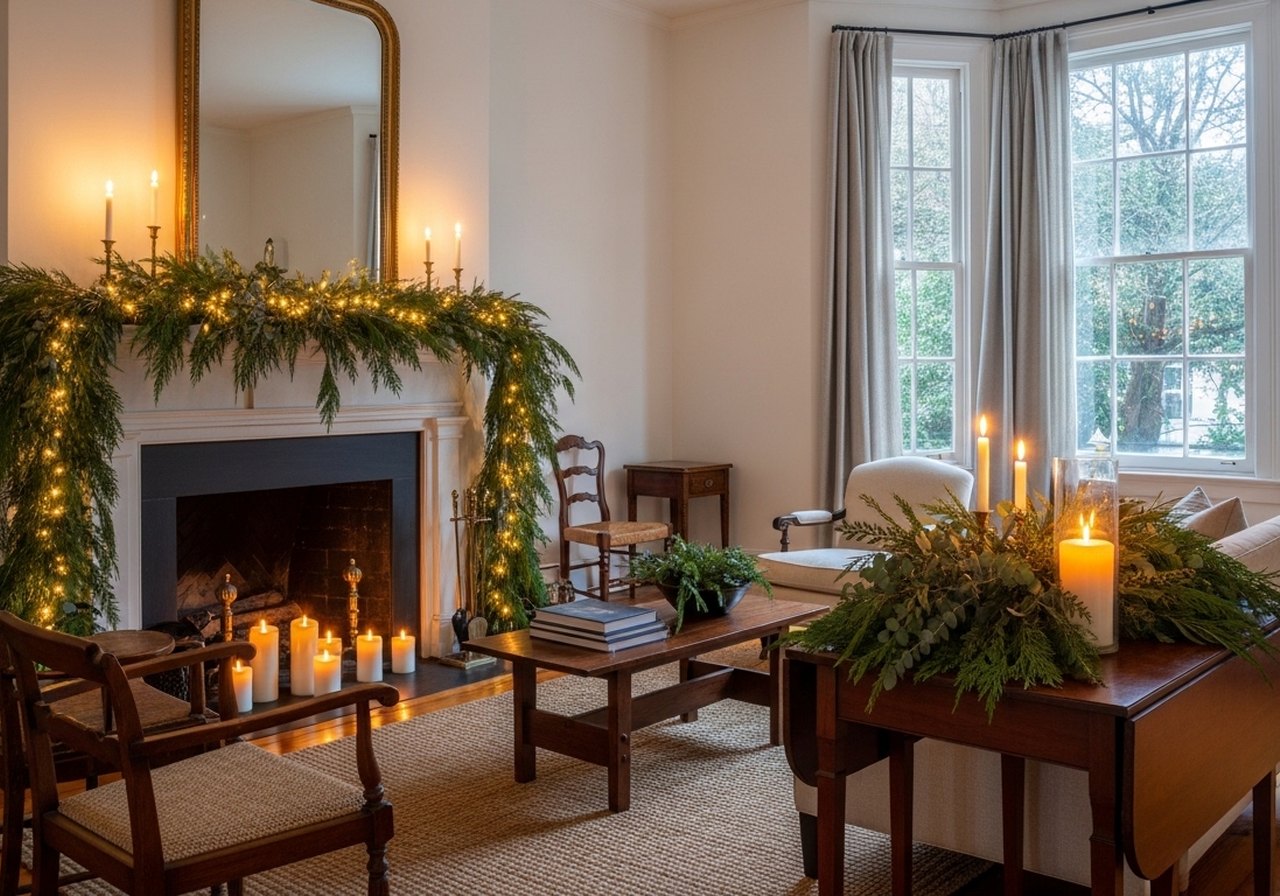
One thing I did not anticipate: the right paint color only looks as good as the light hitting it, and adding two living room wall lamps flanking the fireplace transformed how the sage reads at night, from a flat green under the ceiling fixture to a warm, grazed surface with the plaster's texture visible. The two projects were done at the same time, and the lamp post is the lighting half of the same month. A color under the wrong light is the wrong color; the sconces made the fourth color the right one at 9 pm as well as at noon.
The sample method
A 3-by-3-foot square of each candidate on the actual wall, two coats, on the wall the window's light hits and on the wall opposite; looked at at 8 am, 1 pm and 9 pm with the lamps at their evening level, for a week, with a chair and the rug's corner against it; and the winner is the one that looks like the same color at all three times. Sample pots are $8 and a gallon is $70 and a repaint is a weekend, and the arithmetic has been explained to me by myself four times. Large samples, real walls, all three lights, a week.
The finish
Matte on the walls, because plaster with a century of repairs shows every trowel mark in eggshell and disappears in matte, and because the sconces graze the wall and a sheen would flare; a scrubbable matte, which exists now and did not when the house was last painted. Satin on the trim, in a warm white a shade lighter than the entry's cream, so the trim reads as trim and not as a second wall color.
The ceiling and the trim
The ceiling in a warm white with a drop of the sage in it, so it is not a white lid over a green room; the crown in the trim's satin white, which is the line the eye reads as the room's top. A ceiling in pure white over a colored wall is the most common way a good wall color is undone, and a ceiling with a little of the wall in it is the fix nobody notices and everybody feels.
What the room is now
Sage walls that are yellow-green at noon and brown-green at 9 pm, heart pine and a linen settee that agree with both, sconces at the fireplace and lamps in the corners at 2700K, and a room that has been the same color for eight months, which in this house is a record. It is the room I paint in my head when someone asks for a living room color, and the answer is always the undertone and never the name.
Mistakes
Three rounds. Judging a color on bare walls. Judging one under the ceiling fixture. A veto ignored for a weekend. And a pure white ceiling over round two, which is the lid. The fourth round was the first done by the method, and it is the only one that stayed.
What it cost
Three gallons of the wrong colors, $210, and about $200 in sample pots across four rounds. Two gallons of the fourth, $140, and the ceiling and trim, $110. Two sconces, $190, and David's morning, $260, which is lighting and is in the lamp post. About $660 in paint for a room that should have cost $250, and the $410 difference is the price of the lesson I already knew.
The colors that lost, named by undertone
A white with red in it, which went purple. A green with grey in it, which went clinical. A blue with black in it, which went heavy. The fourth is a green with yellow and brown in it, and the pattern across the four is that the undertone decides and the name does not; "sage" was on two of the four chips and they were different colors in the room. Ask the paint shop for the undertone and ignore the name, and sample the undertone in the room's own light.
The rooms this method has painted since
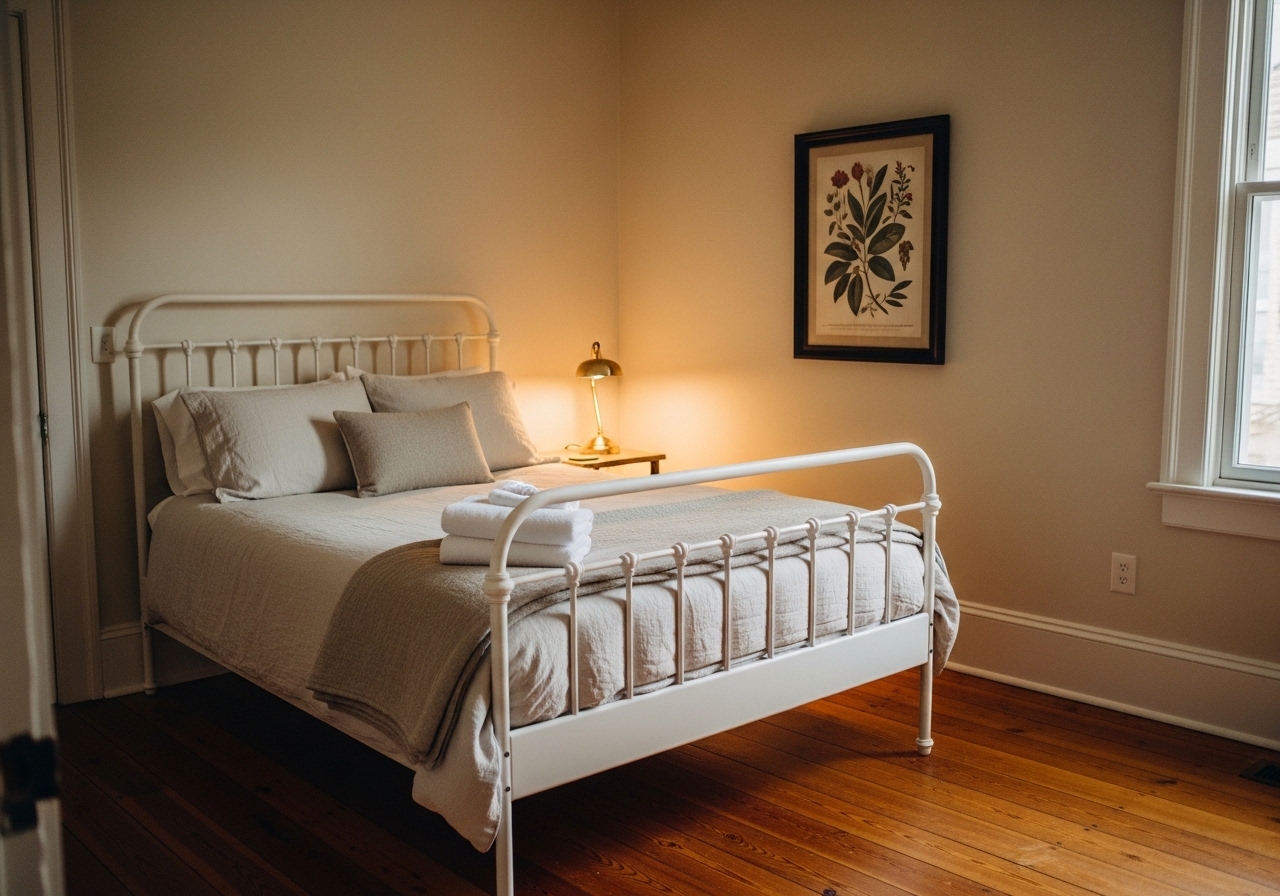
The entry's deep cream, the sunroom's forest green, the bedroom's warm greige and the dining room's warm off-white were all chosen by the week-long sample under finished lighting, and none has been repainted; the living room's three rounds were the tuition and the other four rooms were painted once. The entry post and the sunroom post are two of them, and both took a week of squares on the wall and one gallon.
What a visitor sees
A green room that reads as warm, which visitors say and cannot explain, because the undertone is doing the work and the sconces are grazing it; and the woodwork, which the color was chosen to flatter and which is the thing they compliment next. Nobody has asked the color's name, and I have stopped giving it, because the name in another room with another light is a different color, and the method is the thing worth passing on.
The chip, and why it lies
A chip is 2 inches of color under a shop's fluorescent light, and a wall is 200 square feet under a window and a sconce; the chip is right about the hue and wrong about everything else, because everything else is the room. Take the chip home to narrow the fan deck to three, and then stop trusting it; the three become three sample pots and the pots become three squares, and the squares are the first thing that tells the truth.
In one paragraph
Find the room's direction and its fixed wood, finish the lighting, then sample large on the real walls with the furniture in and look at it at 8, 1 and 9 for a week; choose the color that is the same color at all three; matte on plaster, a little of the wall in the ceiling, and sconces on the wall so the color reads at night. A soft warm sage with a yellow-to-brown undertone, and a room that stopped being repainted.
Shop this post: living room wall lamps, the light the color is judged under