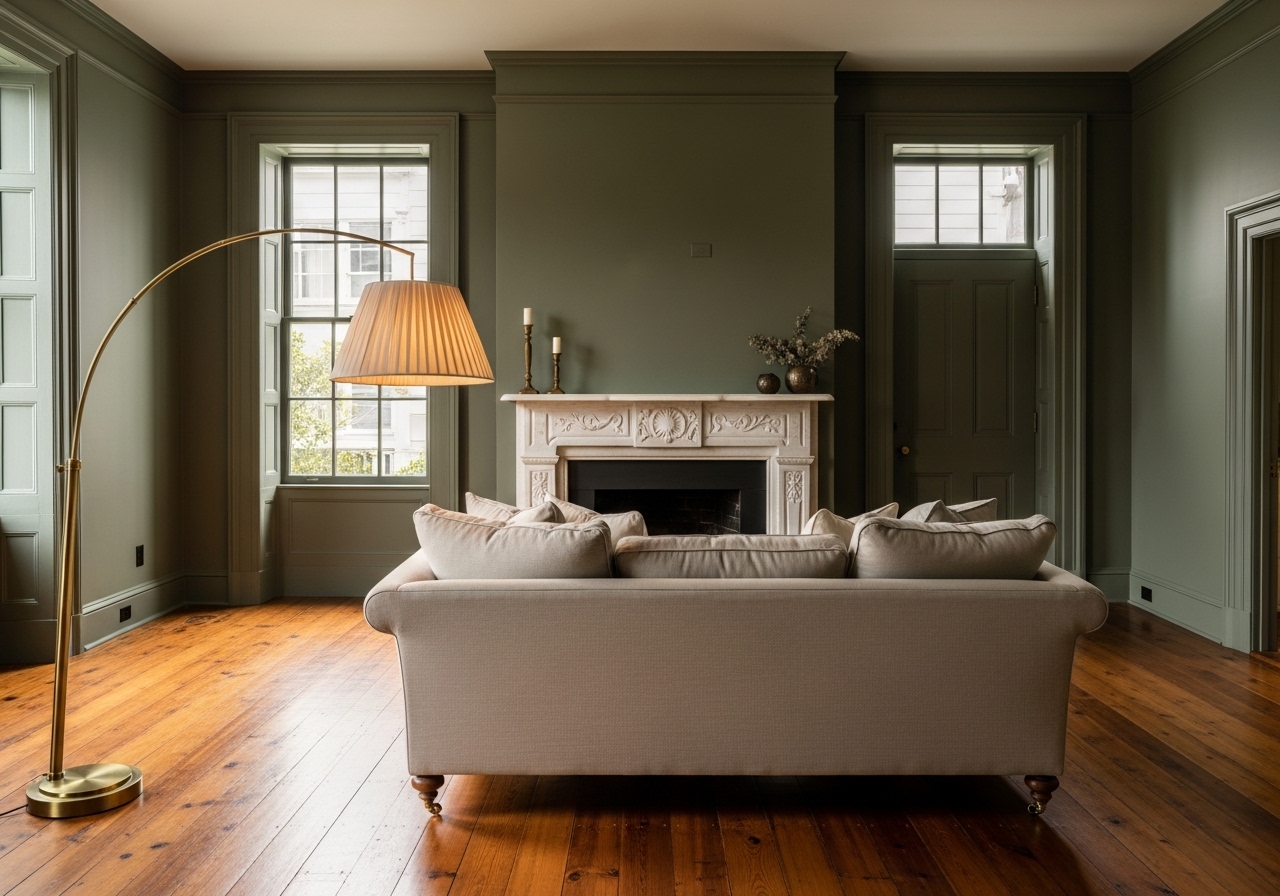
Best Paint Colors for a Living Room in a Historic House: The Fourth One, and the Method That Found It
We painted this room three times, three gallons and about $200 in sample pots, before the color I should have started with. The lesson I keep relearning: paint a large swatch and live with it for a week. I know this. I have known it for years. I painted three walls before I learned it again.
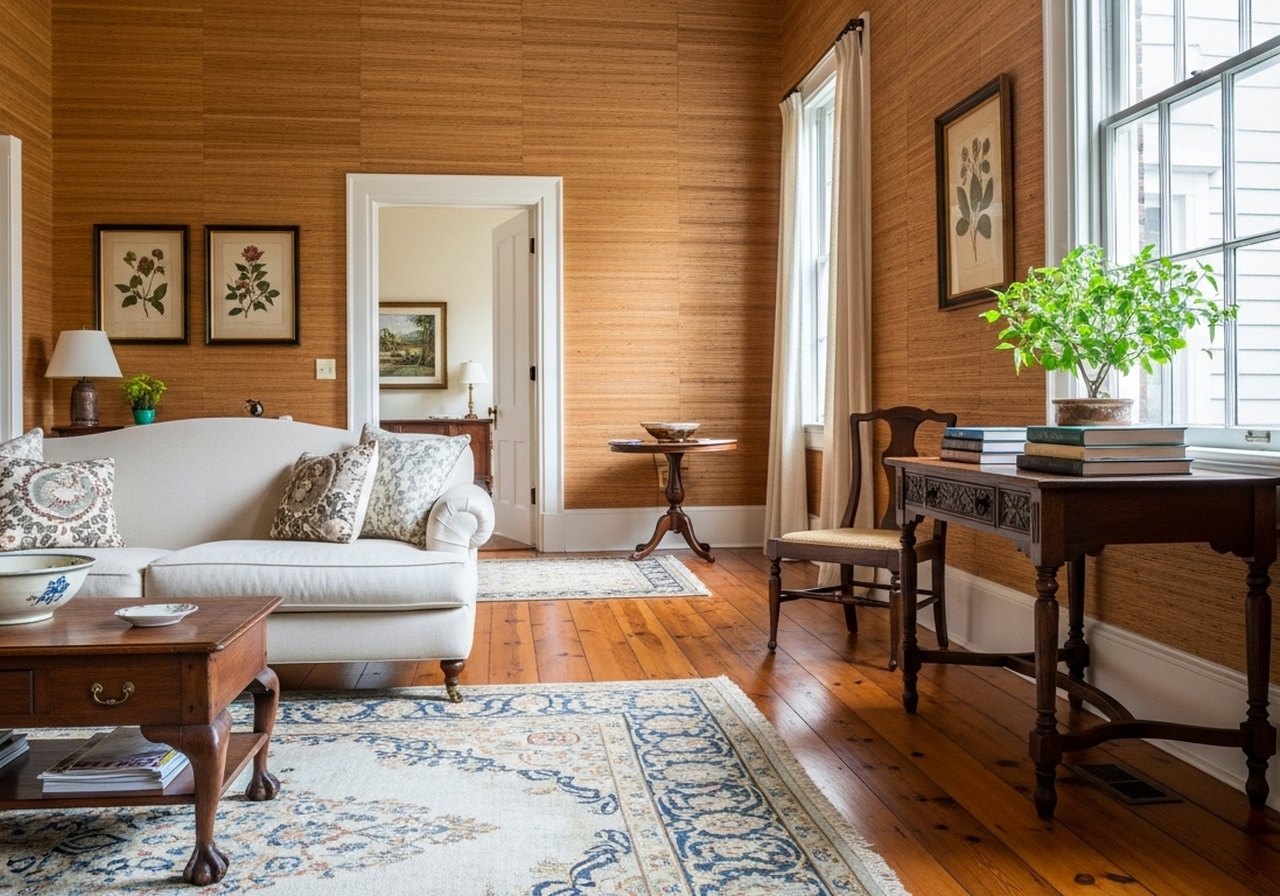
Grasscloth Wallpaper in a Historic Bedroom: Texture Without Pattern, and the Plaster Prep That Matters
Wallpaper in a historic home requires more homework than wallpaper anywhere else. Forty prints were the wrong decade or the wrong scale; grasscloth was neither. Twelve rolls, a clay primer, an installer who had done plaster before, and the twelfth roll this post insists on.
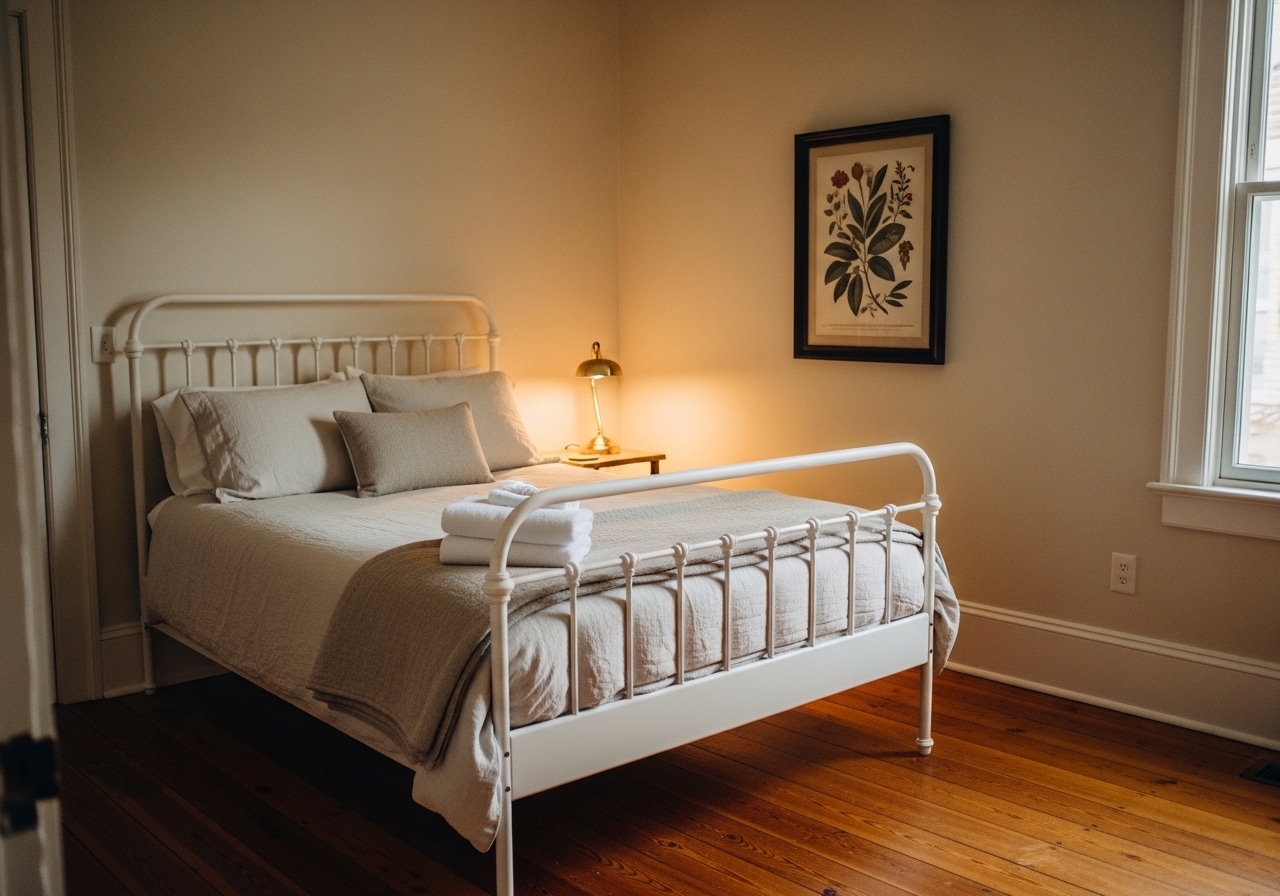
Guest Bedroom Ideas on a Budget: The $400 Refresh That Made a Guest Ask to Come Back
We had $400 and a guest arriving in three weeks. Good bones, no intention. A lamp, linen, one print and two plug-in sconces later, the room has a guest who specifically asked if they could come back, and the lighting was the cheapest part.
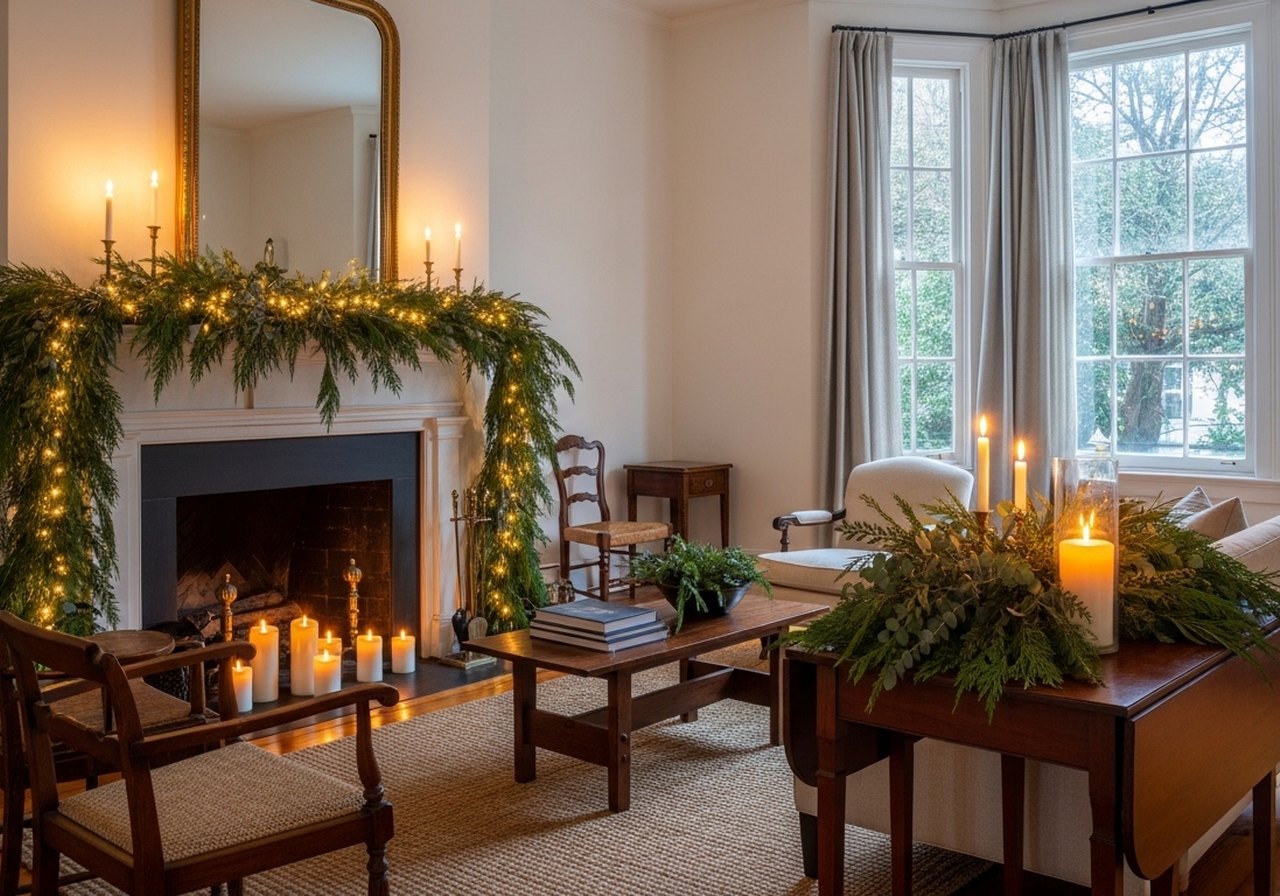
Christmas Decorating in a Historic Home: Greenery, Candles, Amber Bulbs, and Nothing Nailed
Holiday decor in a historic home is about editing, not adding. A house with strong architectural character does not need more; it needs the right things, placed with intention. Greenery, candles, amber bulbs in the sconces, and a house still visible under its Christmas.
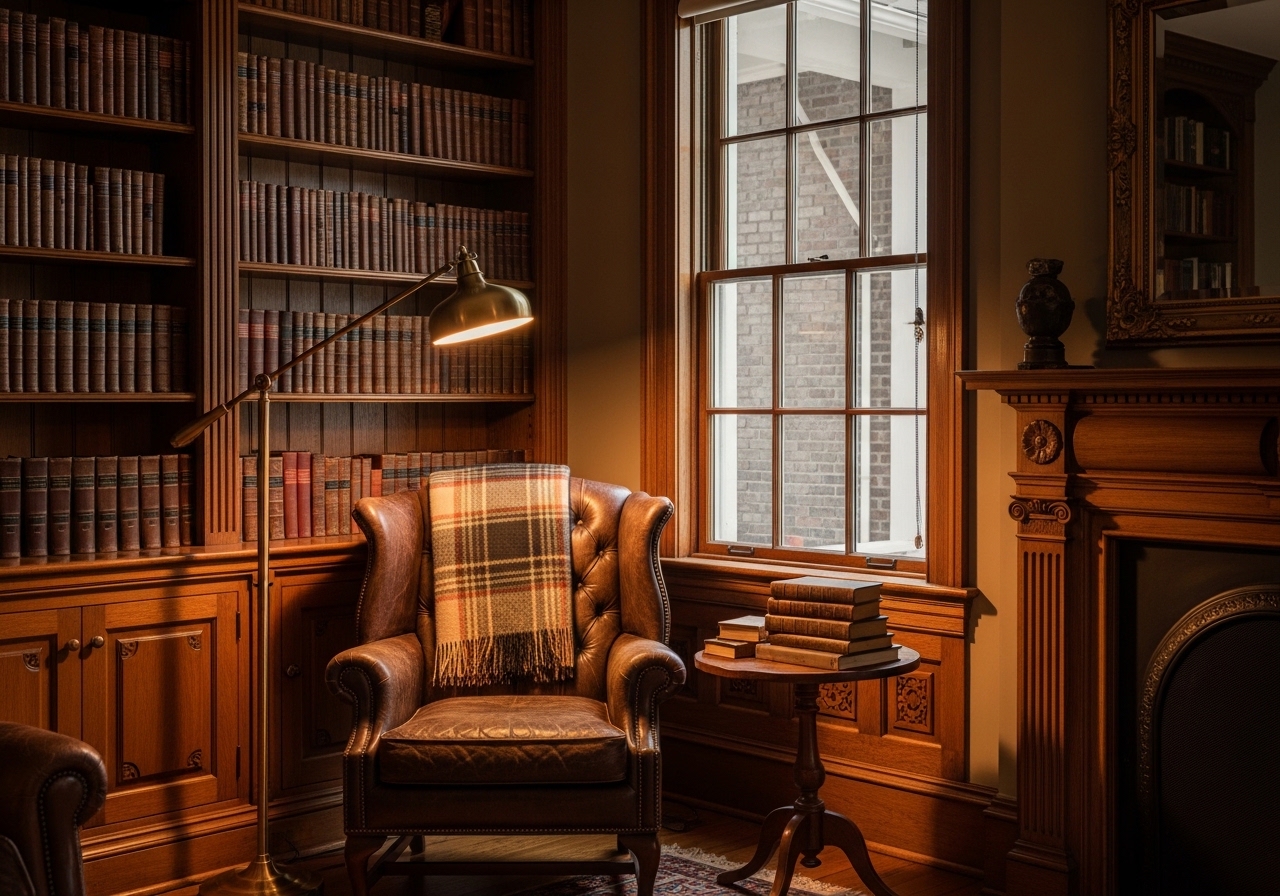
Home Library Ideas: Floor-to-Ceiling Shelves, a Window Bench, and Two Swing-Arm Sconces
The house had a room we called the library with exactly zero bookshelves and a pullout sofa. It is now the most intentional room in the house and the one visitors spend the most time in, and the reading light was the most important decision in the whole project.
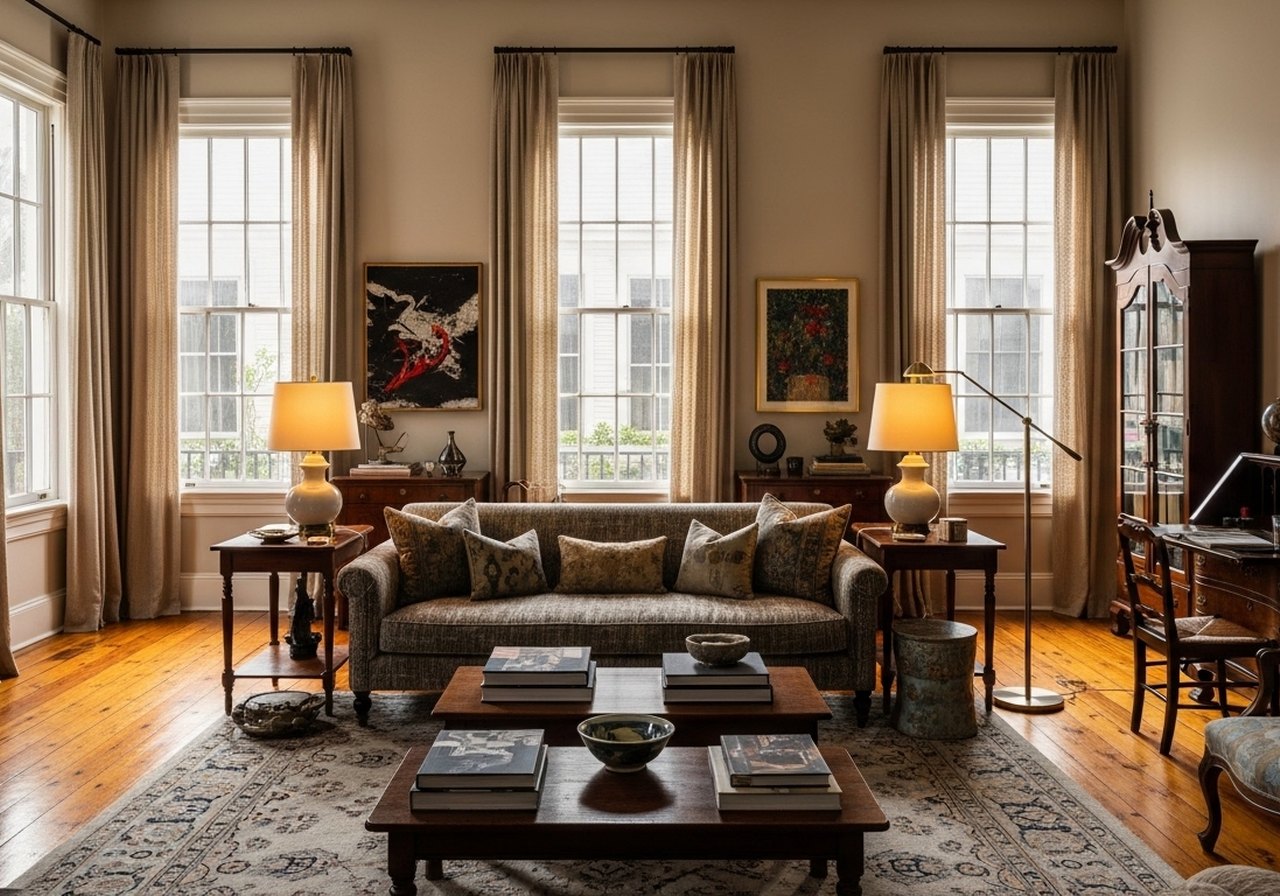
Where to Put Lamps in a Living Room: A Light in Every Corner at Seated Eye Level
One $90 table lamp in the far corner did more for the room than the $1,200 sofa. We had the furniture right for six months and the room felt like a store; a friend said the corner was empty, and she meant a light. I still do not fully understand the physics.
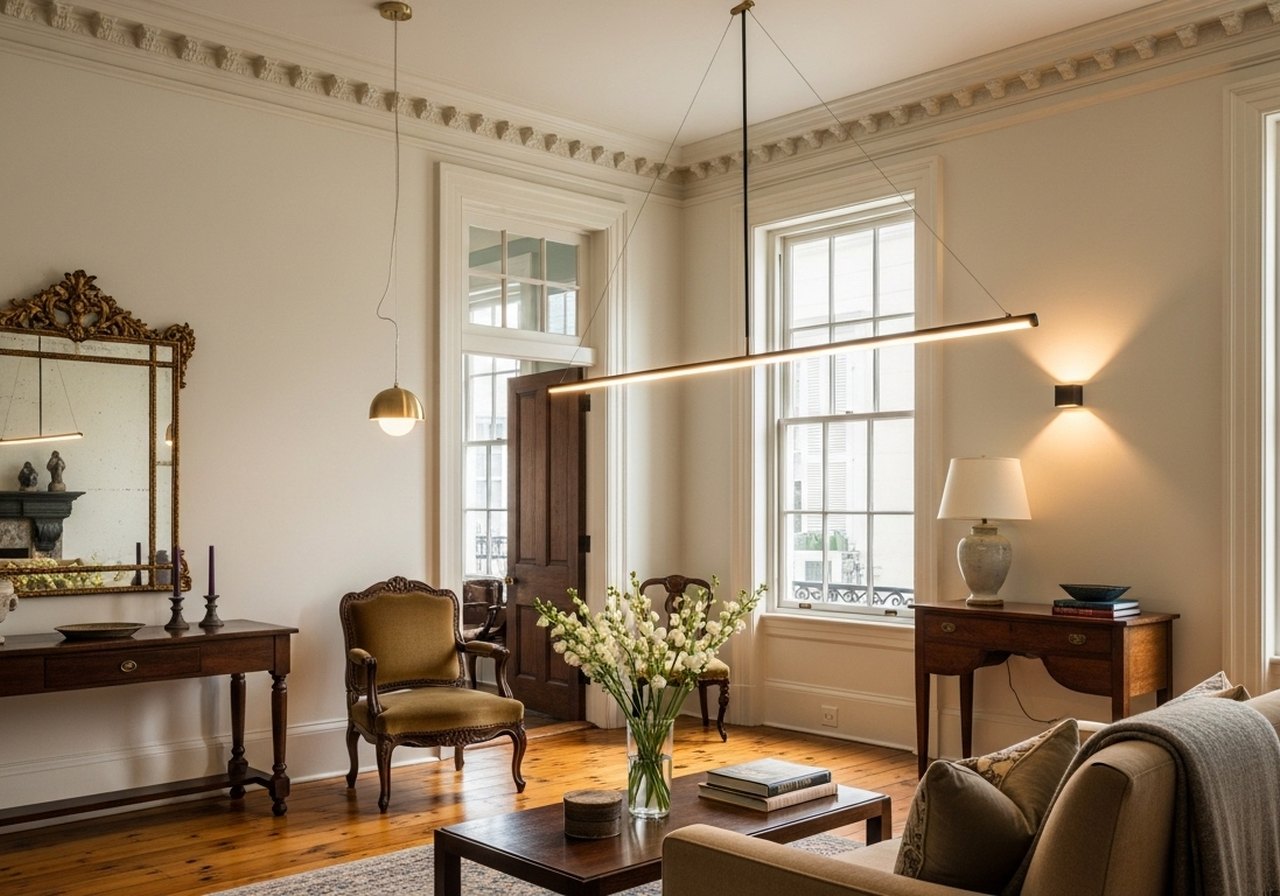
Mixing Antiques With Modern Decor and Lighting: Match Nothing by Accident
The rule is not match everything; it is match nothing by accident. A very new thing beside a very old thing works when the new thing is clearly chosen as a foil and knows it is new. About one modern piece for every two antiques, and the modern piece is usually the light.
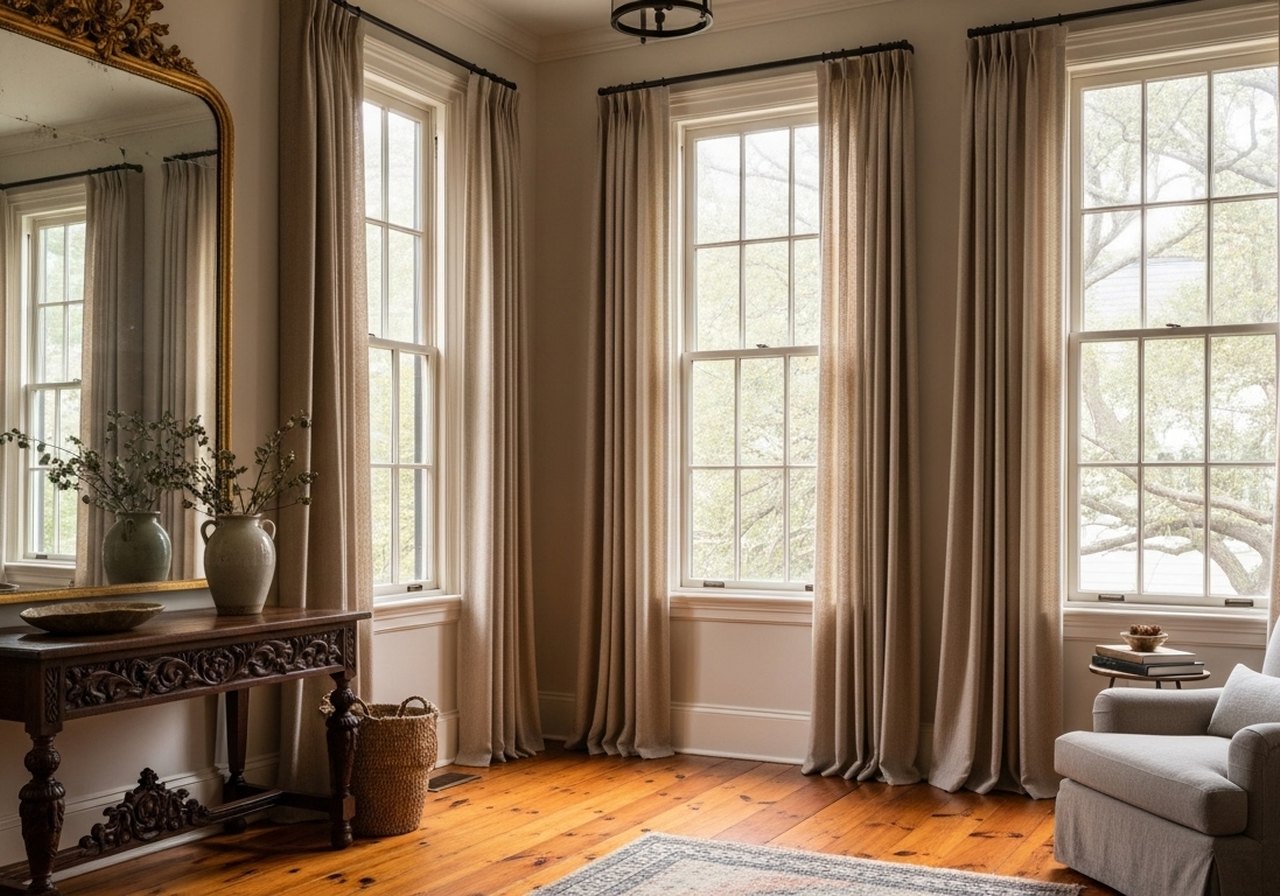
Curtains for Tall Windows in an Old House: Hardware First, Then Linen, Then 2 Inches Below the Crown
Our windows are 9 feet tall with original wavy glass, and standard rods were never going to work. The rod goes just under the crown regardless of where the frame sits, which is the trick that makes the wall look like glass, and the linen was made by a workroom that has dressed Charleston houses for thirty years.