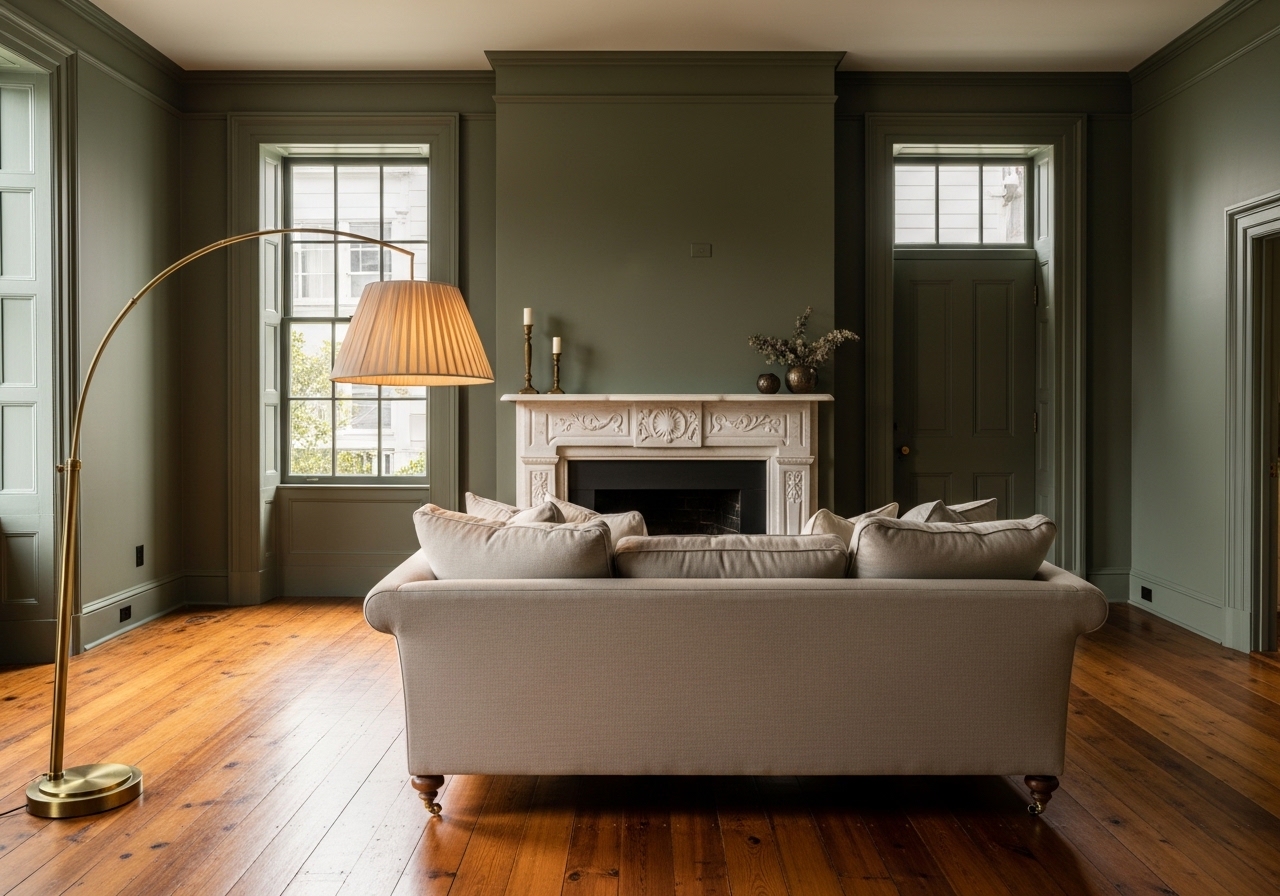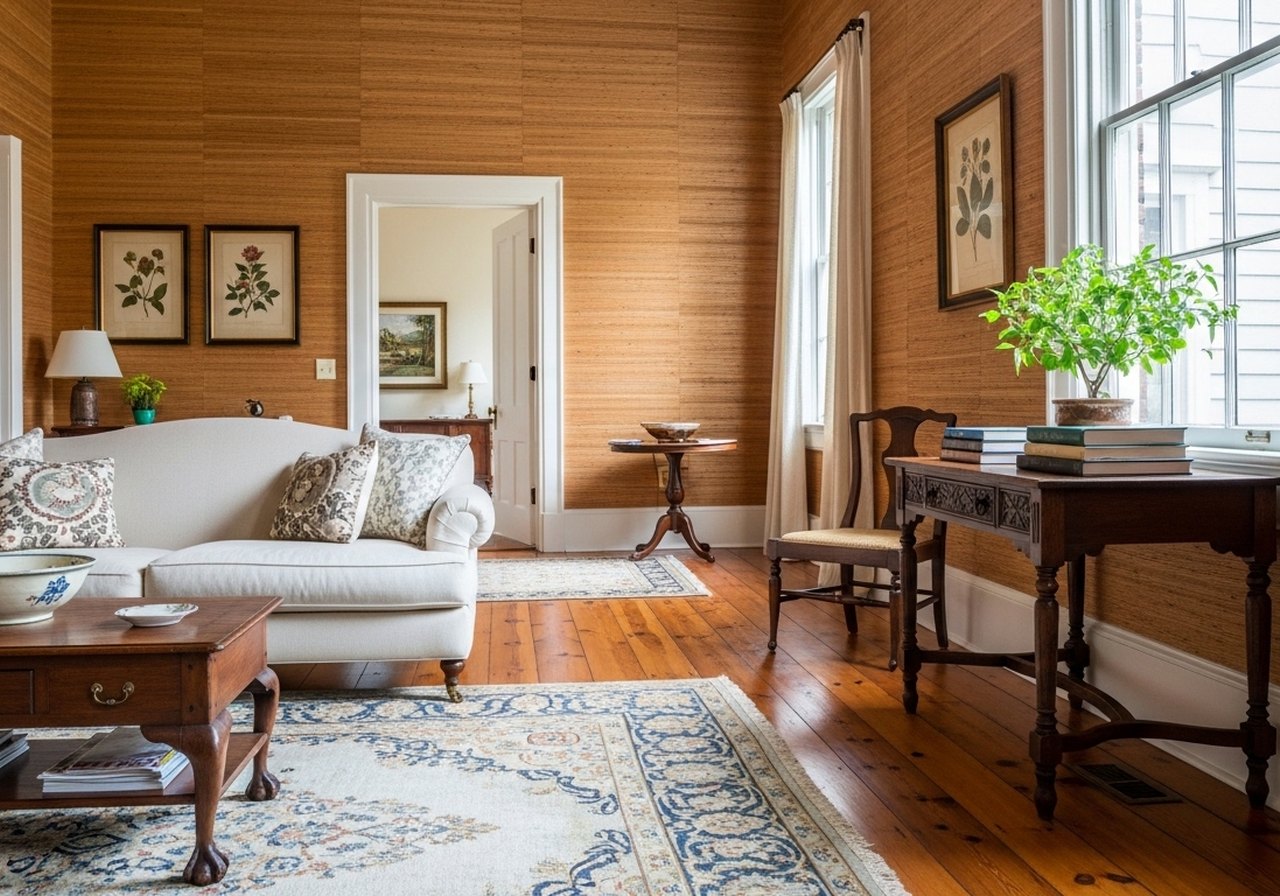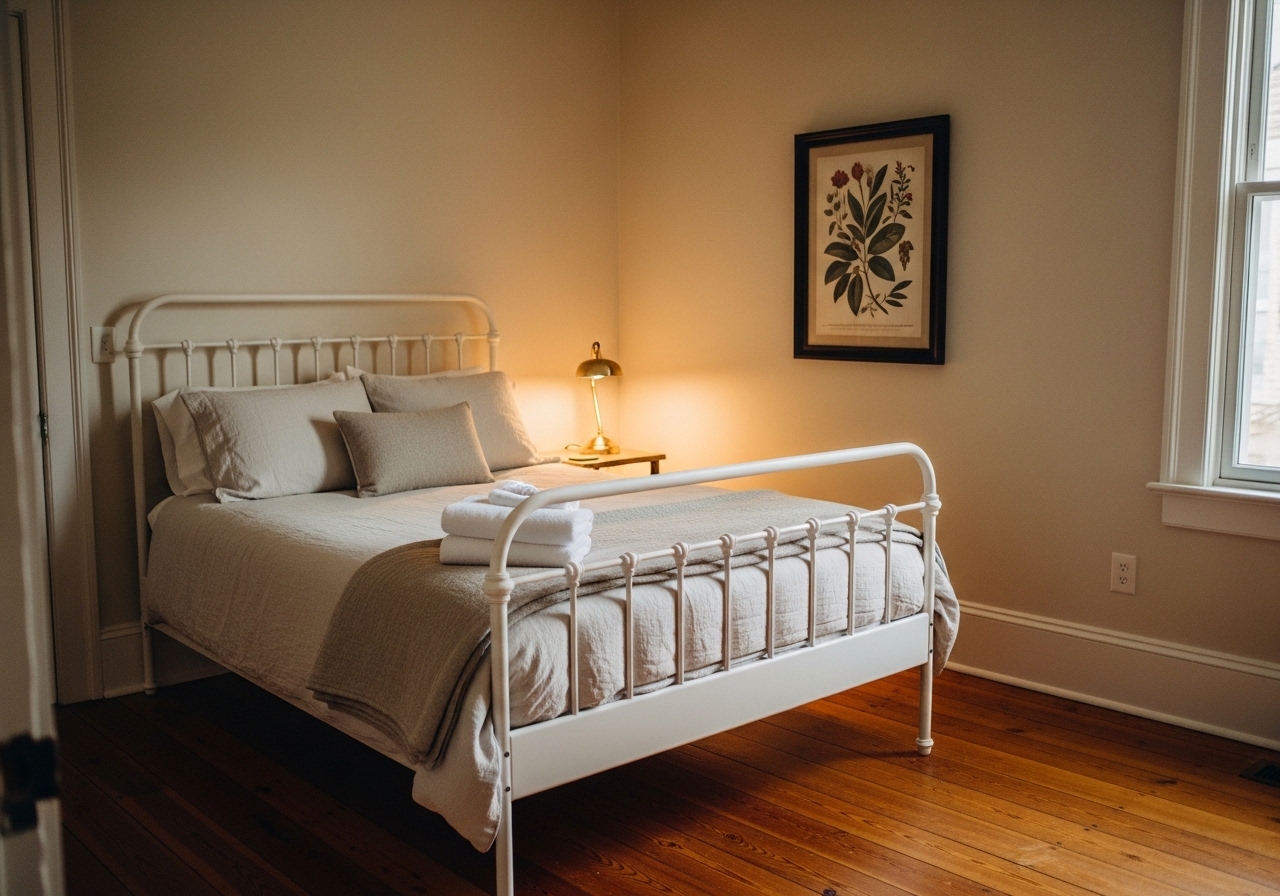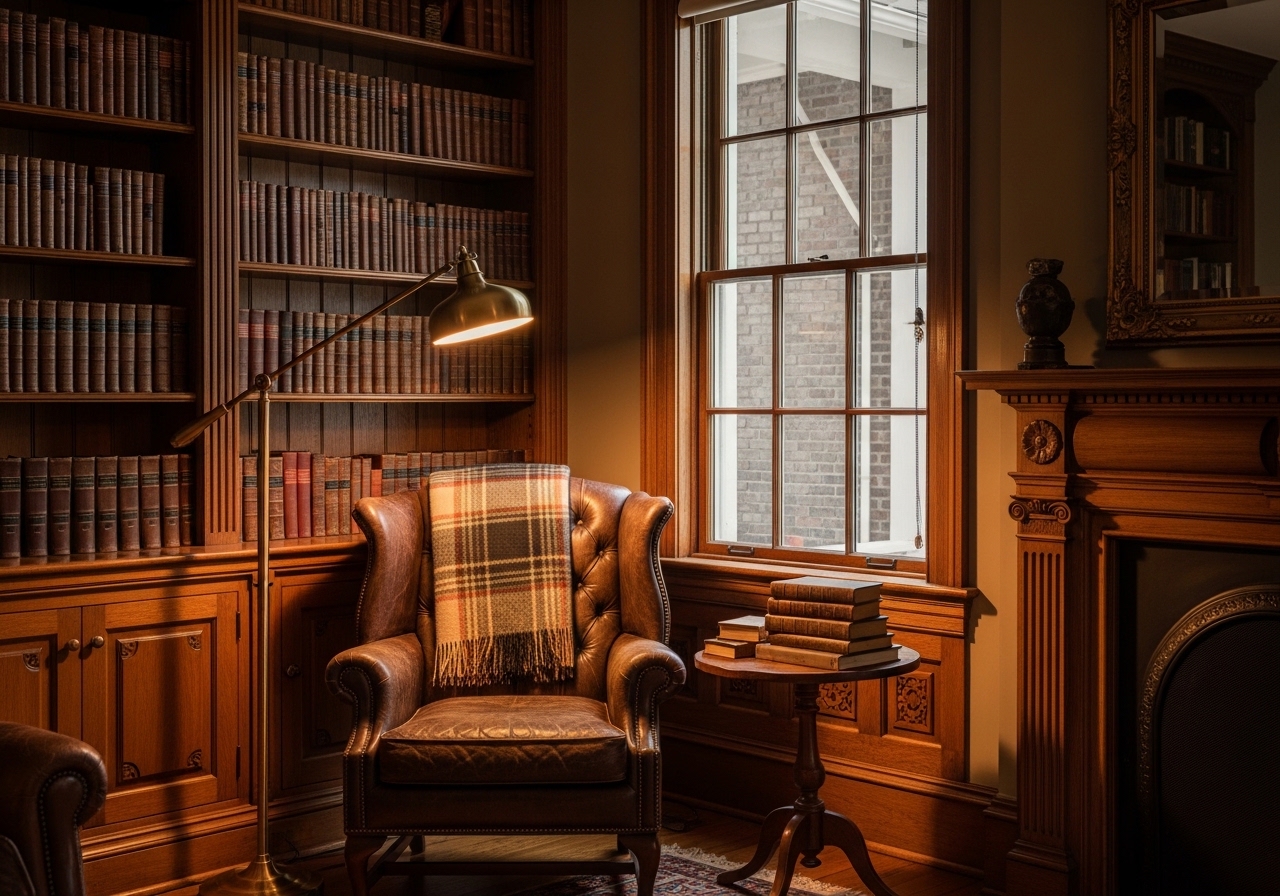
The house had a room we called 'the library' with exactly zero bookshelves.
The room is approximately 12x14, with a single east-facing window and original plaster on all four walls. When we moved in, it contained a pullout sofa and a television. It is now the most intentional room in the house.
We built the shelves first, floor to ceiling on three walls, with a rolling library ladder on the longest wall. The ladder was the detail that made the rest of the shelving make sense; it gave the room a function and a character at the same time.
The nook is a built-in bench in the window alcove, cushioned in a tufted linen, with cabinet storage underneath. It took a local carpenter two days to build and an upholsterer one more to finish. The window seat sits about 18 inches off the floor, which is lower than a standard chair, exactly right for reading with your legs stretched out.
The lighting: a pair of wall-mounted swing-arm sconces flanking the window, positioned so the light falls over the shoulder rather than in the eyes. A floor lamp in the corner for when more ambient light is needed. The overhead fixture on a dimmer for the rare occasions when the room needs full light.
It's the room visitors spend the most time in. Unsurprisingly.
The reading light was the most important decision in the whole project. We hardwired a pair of wall sconces directly into the bookcase framing. Best thing we did.
Dana at Light and Linen wrote a lovely piece on designing a reading retreat, her thinking about reading lamp placement applies directly to this kind of built-in nook.
Lighting Books and a Reading Chair
A library needs two kinds of light: a focused reading light positioned just behind the shoulder so it falls on the page, and a warm wash across the shelves. We used a warm 2700K bulb for comfort over long reading and added small shelf lights so the built-ins glow rather than disappear into shadow.
Making Built-Ins Look Original
We detailed the shelves to match the room's existing trim profiles and baseboard height, painted them to blend, and kept the proportions period-appropriate. Done that way, new built-ins read as part of the original house rather than a modern add-on, which is the whole point in a historic room.
Shop this post: wall sconces