Mixing antiques with modern decor, and modern lighting in particular, works on one rule: match nothing by accident. When you put a very new thing next to a very old thing the contrast can work beautifully or it can look like a staging mistake, and the difference is usually intentionality: if the modern fixture is clearly chosen as a foil for the antique furniture it reads as deliberate, and if it looks like you simply did not replace the old lamp it reads as neglect. I aim for about one modern piece for every two antiques in a room, and the modern piece is usually the light. This post is the intentionality test, the two-to-one ratio and why, the Victorian settee and the raw brass arc lamp beside it, the three mistakes I see most and the fix for all three, the thread that ties eras together, the finish rule, the bulb temperature rule, the bridge piece that lets a modern sconce sit beside an old chandelier, letting contrast do the work in an ornate room and in a plain one, the bring-it-home-first rule, where modern lighting belongs in this house and where it does not, the old fixtures we kept and rewired, the mistakes, and the cost.
The intentionality test
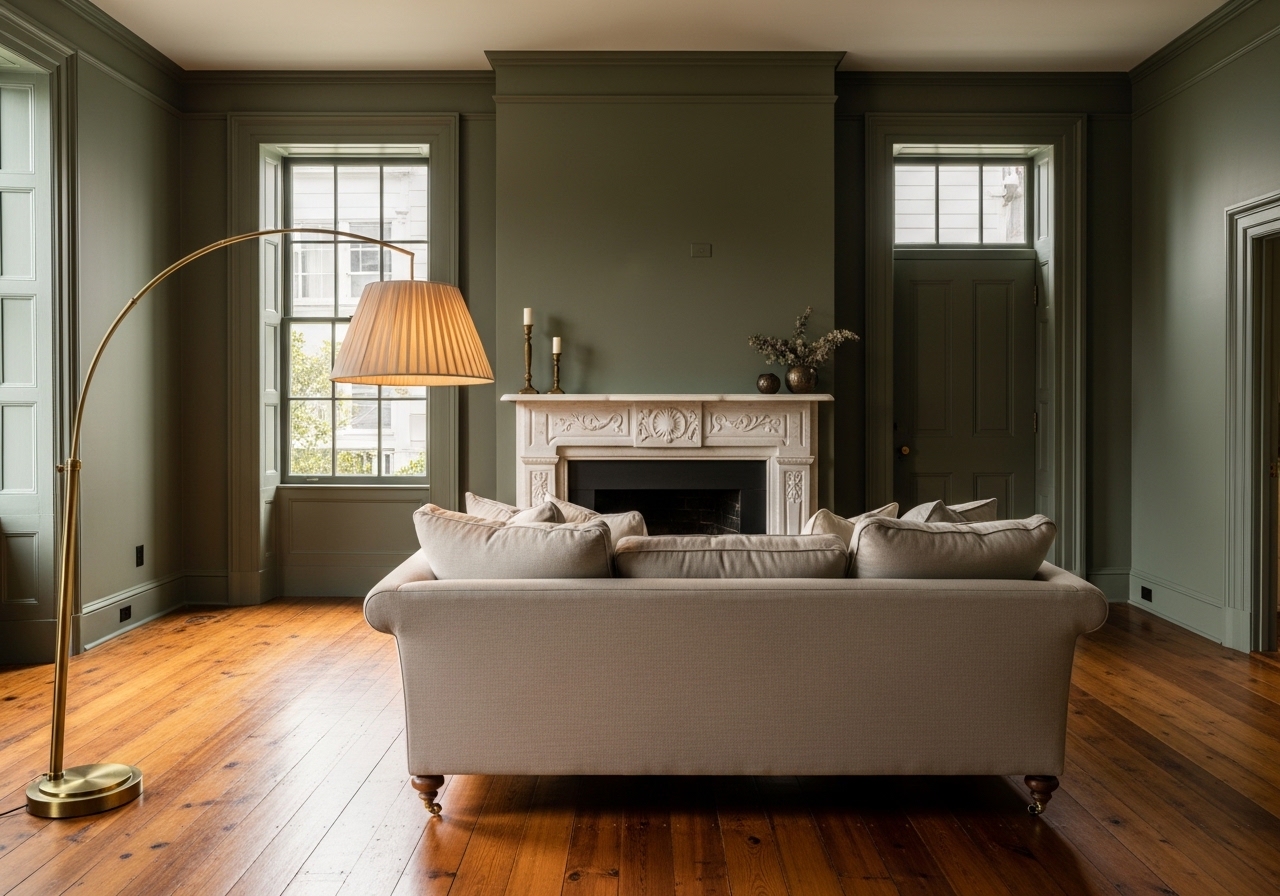
Stand in the doorway and ask whether the modern fixture looks chosen or left over. A clean brass arc lamp next to a Victorian settee looks chosen because nothing about it pretends to be old and everything about its finish and shade refers to the settee; a 1990s brass-look lamp next to the same settee looks left over because it is trying to be old and failing. The test is whether the new thing knows it is new. A modern fixture that is honest about its date is a foil; one that is dishonest is clutter.
Two to one
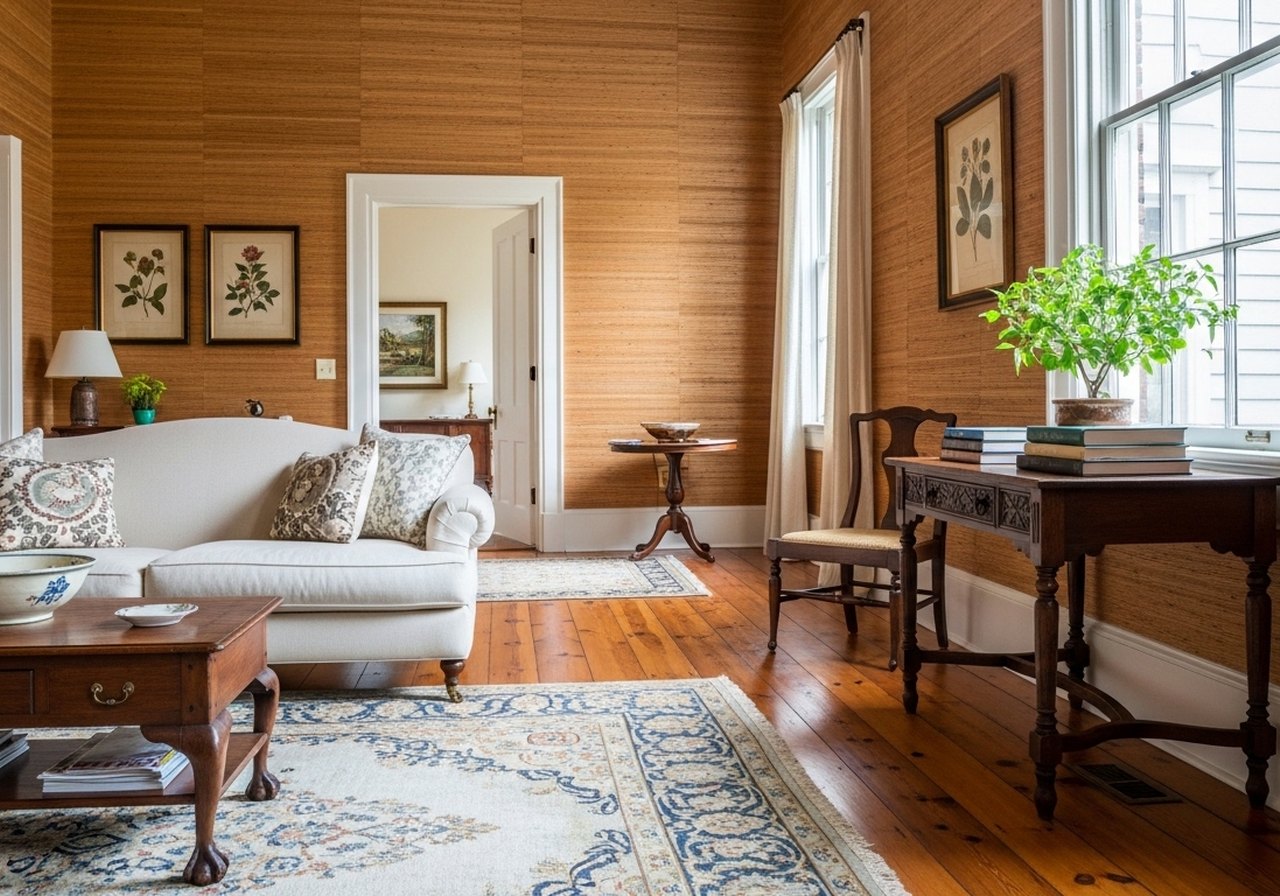
Roughly one modern piece for every two antiques in a room, so the room reads as an old room with a considered exception and not as a mix; at one-to-one it is a mix, and a mix is what a staging company does. In our living room the settee, the chairs, the tables and the rug are old and the arc lamp and the sconces are new, which is closer to three-to-one, and it reads as a room that has been lived in for a long time by someone who bought a lamp last year. The ratio is a guide, and the guide is that the old should outnumber the new by enough that the new is the exception.
The settee and the arc lamp
A Victorian settee reupholstered in natural linen, and beside it a sleek arc floor lamp with a raw brass finish, clearly contemporary, with no attempt to look period-appropriate; the brass references the hardware on the settee's feet and the linen shade picks up the upholstery, and the contrast becomes a conversation. The lamp is the room's most modern object and it is 3 feet from its oldest, and the reason it works is that the lamp shares two things with the settee and differs in everything else. Shared finish, shared fabric, different century.
The three mistakes
Mismatched scale: a tiny modern lamp next to a massive antique dresser, so the new thing reads as an afterthought. Mismatched warmth: a cool LED in a room full of warm wood, so the modern fixture's light argues with everything the antiques are. Mismatched intentionality: one very modern piece surrounded by antiques that look like they arrived from different decades and nobody sorted them, so the room has no era to contrast against. The fix for all three is the same: slow down. The scale is checked in the room, the bulb is 2700K, and the antiques are edited until they agree with each other before a modern piece is asked to disagree with them.
The thread
Mismatched pieces look intentional when one element repeats: a metal tone, a finish, a consistent bulb temperature. We carry unlacquered brass through the living room, on the settee's feet, the arc lamp, the sconces and the picture frames' hardware, and a warm 2700K light through every fixture, so antique and modern feel like part of one collected scheme rather than a collision of periods. The thread can be anything, and it has to be one thing, and in this house it is brass and warm light.
The finish rule
Unlacquered brass, black iron and nickel are the three finishes in the house, one per room, and a modern fixture in any of them can sit beside an antique in the same finish because the finish is the handshake; a modern fixture in polished chrome or brushed nickel cannot, because those finishes did not exist in 1892 and they announce the decade they did. The brass post is the finish that ages; a modern fixture in a finish that ages will look like it has been in the room as long as the settee in ten years, which is the goal.
The bulb rule
2700K in every fixture, old and new, because the light is the thing the eye reads first and a room where the old chandelier is warm and the new sconce is cool is a room where the sconce is a stranger; the bulb is the cheapest way to make a modern fixture belong and the first thing to change. A warm-dimming bulb in the modern fixture, so it goes amber at low levels the way the old chandelier's candelabra bulbs do, and the two fixtures agree at every setting.
The bridge piece
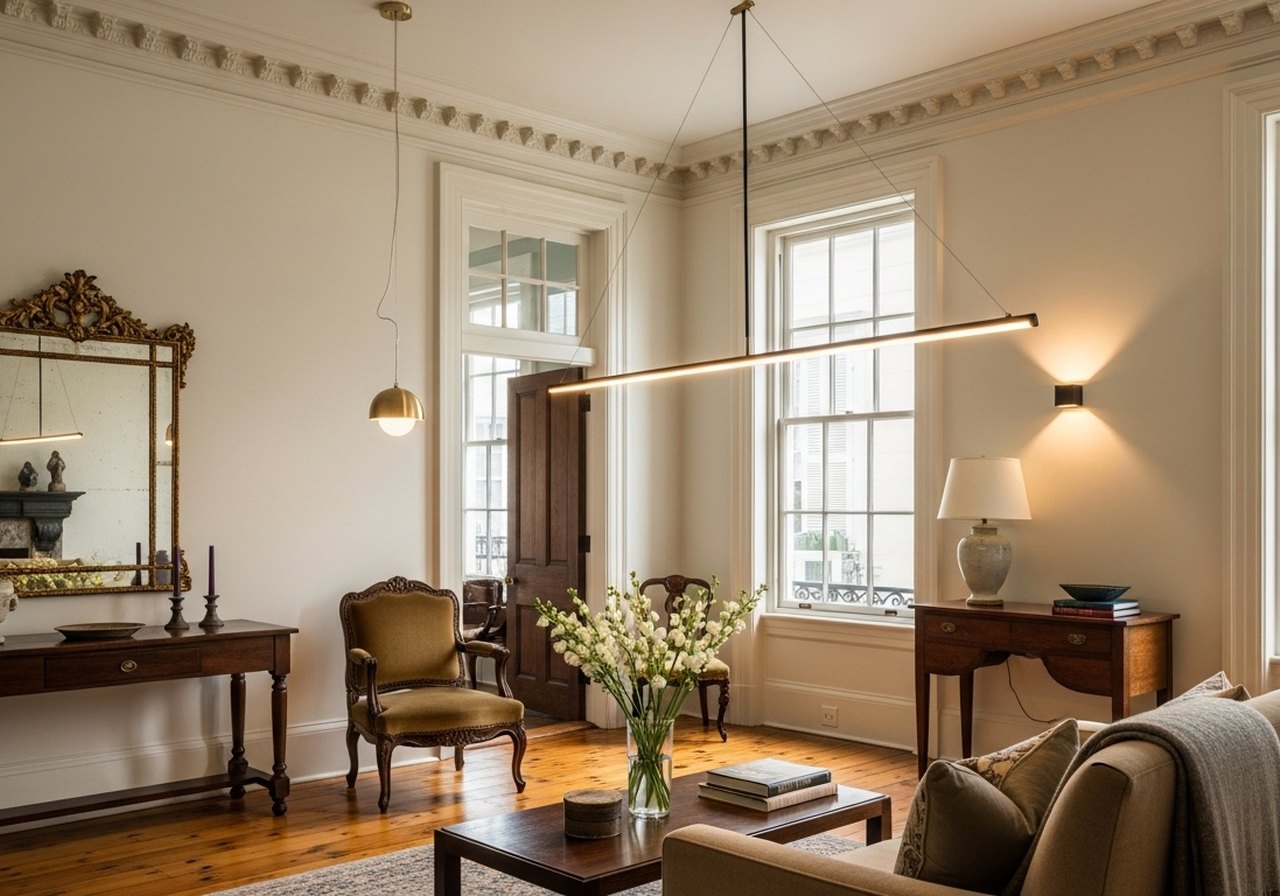
Between the parlor's old brass chandelier and the modern furniture under it, a pair of modern wall sconces with clean lines but a warm brass finish, comfortable next to the chandelier without competing with it; they are the piece that connects the ceiling's century to the floor's, because they share the chandelier's metal and the furniture's line. Every room that mixes eras needs a bridge, and it is usually a wall fixture, because a wall fixture is seen beside both the ceiling and the furniture.
Contrast in an ornate room
In the front parlor, full of ornate antiques, a clean modern fixture gives the eye a rest: the sconces are plain cylinders with no detail, and against the carved mantel and the medallion they are the quiet thing the eye lands on between the loud ones. A modern fixture in an ornate room is a pause, and the room needs one.
Contrast in a plain room
In the back parlor, which is plainer, a sculptural antique lamp on the side table adds the character the room was missing, and the modern piece is the plain drum overhead; the room leans the other way, old ornament against new restraint, and it is the same rule reversed. We let the room decide which way to lean: ornate rooms get a plain modern light, plain rooms get an ornate old one, and the mix is the relief either way.
Bring it home first
Bring the new fixture into the room before you buy it, or a paper mock-up of it, and live with it for a day; you will know. The arc lamp came home on approval and stood beside the settee for a weekend before it was paid for, and a modern pendant we tried in the dining room came home the same way and went back on Monday, which is the statement pendant post's lesson from the other side. A day in the room is worth a month of catalog pages.
Where modern lighting belongs in this house
The living room's arc lamp and sconces, the eat-in area's rattan pendant, the master bedroom's articulating reading sconces, the kitchen's brass domes, and the library's swing arms: the rooms that are used hard and where a fixture has a job a period fixture cannot do as well. Not the front parlor's ceiling, the dining room's ceiling, the foyer or the exterior, where the house's own era is the statement and a modern fixture would be a correction nobody asked for. The rule is that modern lighting goes where function wins and period lighting goes where the architecture does.
The old fixtures we kept
The parlor's chandelier, which came with the house and was rewired by David for $220; a pair of 1920s brass sconces in the upstairs hall, rewired and given linen shades; and a 1950s ceramic lamp from an estate sale with a slight buzz in its dimmer that the plaster hides. An old fixture rewired is safer than a new one and belongs more, and rewiring is $80 to $220 a fixture, which is less than a good new one. The hardwiring post is what rewiring an old wall involves.
Mistakes
A 1990s brass-look lamp that thought it was old, for a year, before the arc lamp replaced it. A 3000K bulb in the first modern sconce, which made it a stranger. A modern pendant in the dining room for a weekend. And a room, early on, where the antiques were from four decades and nobody had sorted them, so the modern piece had nothing to contrast with and the room read as a shop.
What it cost
The arc lamp, $380. The two bridge sconces, $260, and their wiring, $260. The dining room pendant's return, nothing but a Monday. Rewiring three old fixtures, $480. About $1,380 for the modern lighting in a house of old things, and the rule that made it work cost nothing but a weekend of the lamp standing in the room on approval.
The modern piece's job
Every modern fixture in this house is there because it does something the period fixture in that spot could not: the arc lamp reaches over the settee where a table lamp could not sit, the articulating sconces aim at a book, the rattan pendant is light enough for a 9-foot ceiling, the kitchen's domes close over the bulb. A modern fixture with a job is chosen; one without a job is a style, and a style in an old house is the thing that dates. When someone asks why a room has a modern light, the answer should be a verb.
What guests say
That the house feels collected and not decorated, which is the compliment the two-to-one ratio earns; and, occasionally, that they did not notice the arc lamp was new, which is the compliment the thread earns. Nobody has said the room looks mixed, and the day someone does is the day the ratio has slipped. A mixed room is noticed; a collected one is felt.
The antiques' own light
An antique is lit by a modern fixture in this house more often than the reverse, and the modern fixture's job is to make the old thing the subject: the sconces graze the carved mantel, the arc lamp lights the settee's linen, the library's swing arms light the books. A modern fixture that lights an antique well is a modern fixture that has earned its place beside it, and the test of the pairing is whether the light falls on the old thing or on the new one.
Buying antiques for a room with modern light
The reverse question: an antique bought for a room that already has a modern fixture should share the fixture's thread, so the settee's brass feet were the reason the arc lamp was brass and the next chair bought for that room will have brass on it somewhere. A room's thread runs both ways, and once it is set, every purchase in either century has to pick it up.
In one paragraph
Match nothing by accident. Two antiques to one modern piece, and the modern piece is honest about its date. Share a finish and a bulb temperature across eras so the room has a thread. Use a plain modern light in an ornate room and an ornate old one in a plain room. A bridge fixture on the wall between the old ceiling and the new floor. Bring it home for a day first. Modern where function wins, period where the architecture does.
Shop this post: modern wall sconces in a warm finish, the bridge piece