When we bought this house in March 2019, a contractor friend walked through and said, "This'll take eighteen months and about $80,000 to get into good shape." He was optimistic on both counts. We spent $127,000 in the first eighteen months and still hadn't touched the kitchen. What he underestimated wasn't the scope. He just didn't know old houses.
This is what I wish someone had written plainly before I started a historic home renovation. Not a glossy before-and-after. The actual stuff.
The First Thing to Understand About Old Plaster
Our ceiling in the parlor failed six months after we moved in. Not collapsed — it sagged about two inches in a three-foot patch, which is how old horsehair plaster tells you it's done. The keys, the little squiggles of plaster that grip the lath, had finally given up on one section. This is completely normal in a house built in 1891. It does not mean the whole ceiling is failing. But it does mean you need a plasterer, not a drywall contractor.
I made the mistake of calling a drywall contractor first because they were faster to return calls. He quoted me $1,800 to "take down the plaster and put up drywall." The cost to redo that section properly with a preservation plasterer who matched the existing horsehair mix came to $14,000. That's not a typo. That one ceiling patch, done right, was $14,000. The reason is that matching existing historic plaster so the joint disappears into the room is a skilled trade. There are not many people left who do it well.
I should have found the plasterer first. If I had, I'd have spent the same money but without three months of living with exposed lath and the stress of doing it twice.
Lead Paint Is a Negotiation Point, Not a Surprise
Every house built before 1978 has lead paint. Every one. The question is condition — is it intact, is it chalking, is it accessible to children. Before we bought, our inspector noted lead paint in several rooms and said it was stable. Fine. What the inspection did not tell us was that three layers of paint on the original pine window sashes was going to make replacing the glazing compound very slow and very expensive because of the encapsulation requirements for disturbing it.
Get a full lead assessment before you buy, not just a note in the inspection report. An industrial hygienist will test every room and give you a condition report. That report affects your renovation budget significantly. It cost us $450 and would have saved us two months of planning surprises. I consider it essential now and I'd recommend it to anyone buying a pre-1978 house.
What "Good Bones" Actually Means
People say this about old houses constantly and it's mostly true in a specific way. The structural framing in a well-built Victorian house — old-growth heart pine, dimensional lumber cut heavier than today's standards — is genuinely excellent. Our floor joists are 2x10s on 12-inch centers and they are dead solid. The old-growth pine floors are 7/8 inch thick and can be sanded multiple times, which modern 3/4-inch flooring cannot.
What is not good bones: the electrical (almost certainly knob and tube in a pre-1920 house), the plumbing (lead supply lines in houses before 1950, galvanized in houses before 1980), and the thermal envelope (no insulation in the walls, single-pane windows). We replaced all three. Combined cost: $38,000. None of it shows. None of it makes the house prettier. But it made the house safe and livable, and that has to happen before you worry about anything else.
If you want the full story of our first year in this house, that's in what I learned buying a historic home. Short version: we knew what we were signing up for and it was still harder than we expected.
The Contractor Problem
Finding a contractor with genuine old-house experience is the hardest part of a historic home renovation. Not the most expensive part. The hardest part, because it is time-consuming and the consequences of getting it wrong are severe.
The contractor who did our entry hall and stair restoration came from a referral through the Preservation Society of Charleston. He had thirty years of work in pre-1940 Charleston houses. He knew without being told that you don't use Portland cement mortar on original brick, that you preserve the original door hardware whenever possible, and that the first question before any window work is whether the original sashes can be repaired rather than replaced. His hourly rate was higher than the next two bids. His work is correct and it will last.
The other thing I'd tell anyone starting a historic renovation: write down what "historic" means to you before you hire anyone. Do you want to preserve as much original material as possible? Or are you comfortable with historically appropriate replacements? Those are different projects and they need different conversations with your contractor from the start.
Lighting in an Old House
Old houses were built before electricity, then retrofitted with it, and the result is almost always inadequate. Too few circuits, switches in odd places, no overhead fixtures in rooms that should have them. We rewired completely in year two.
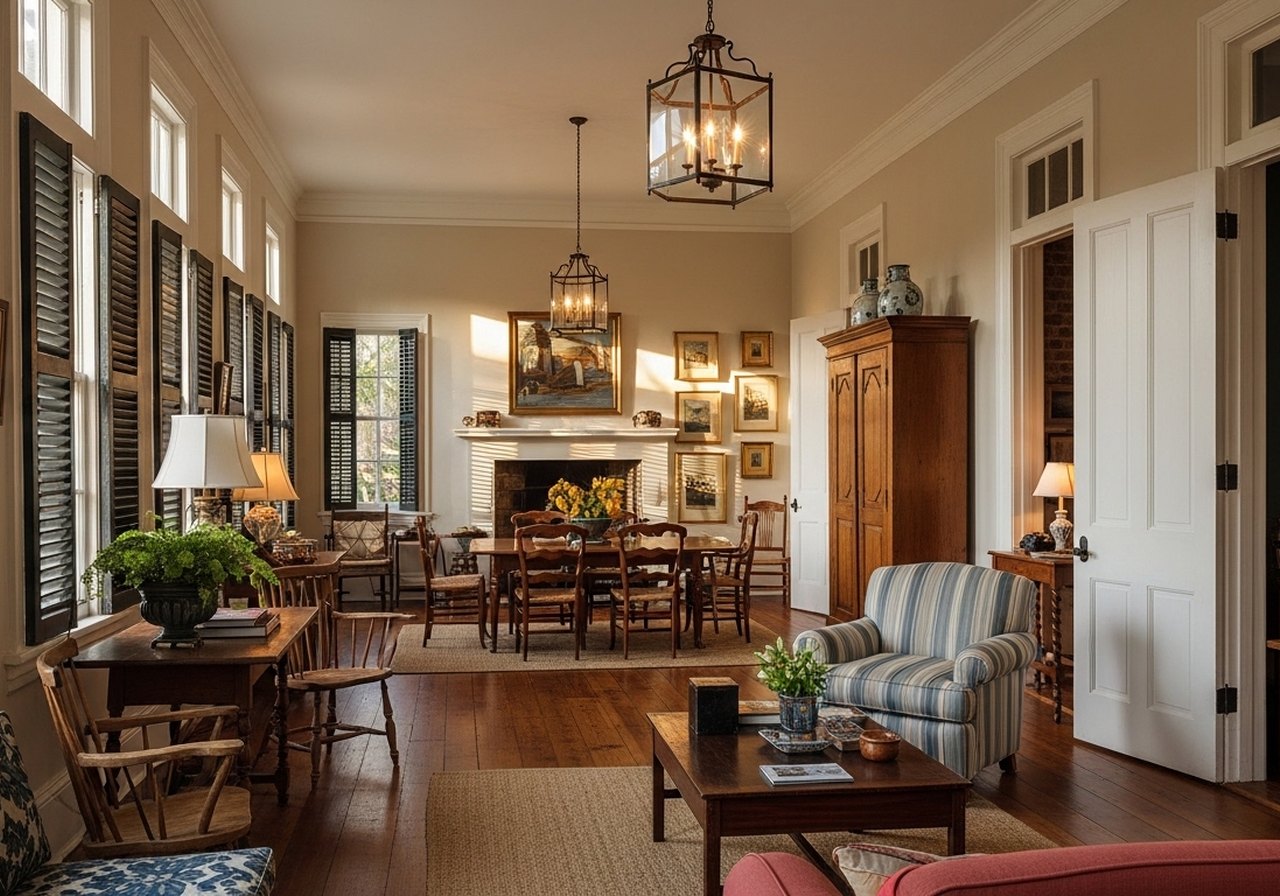
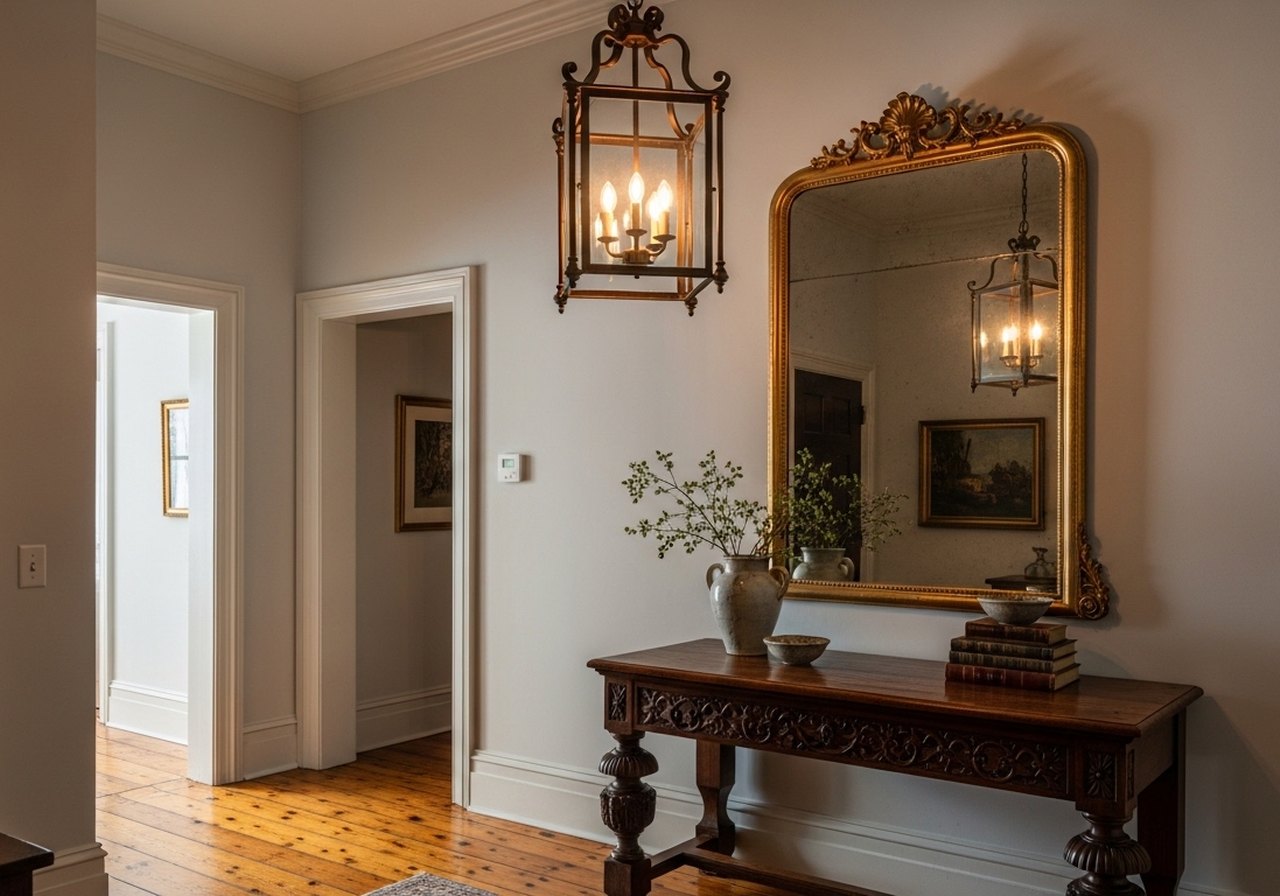
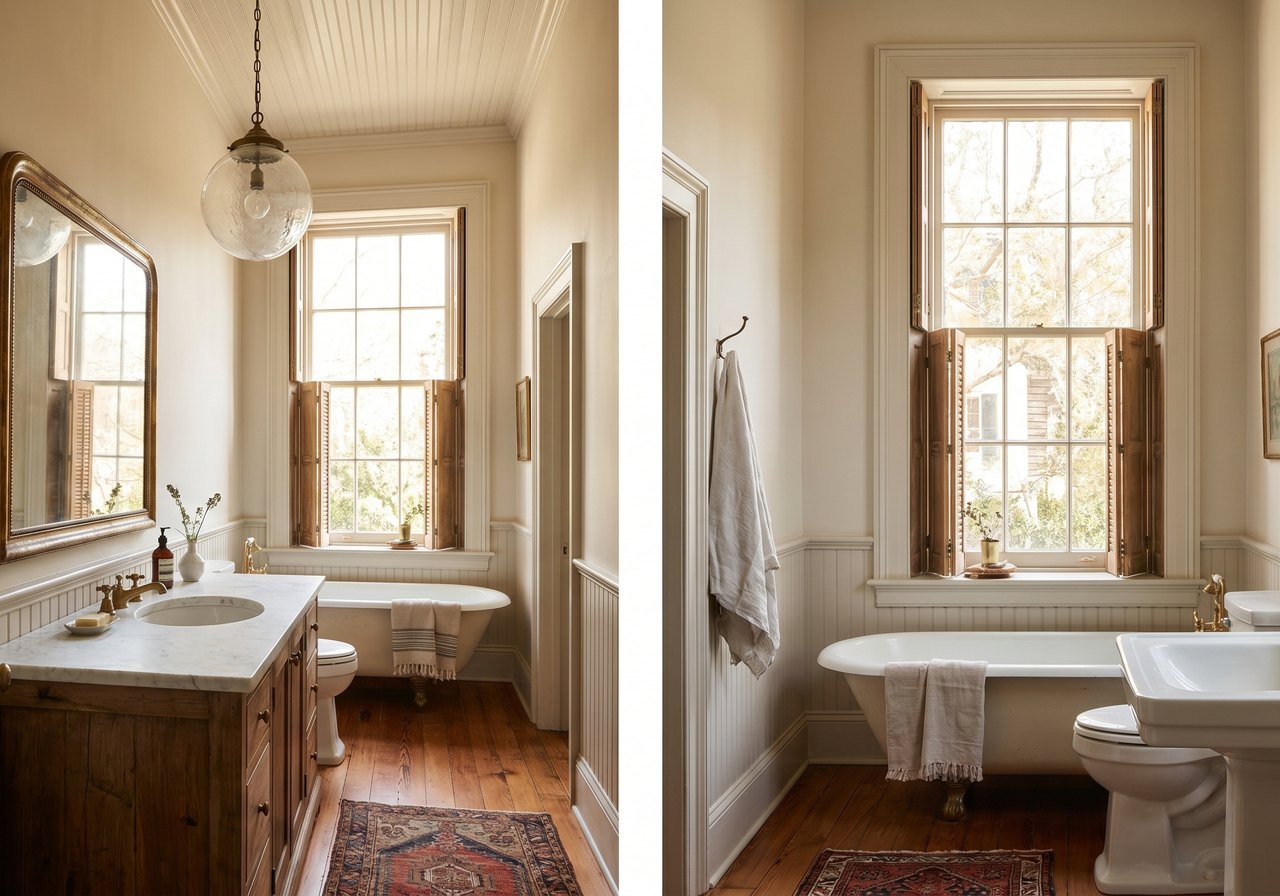
What I didn't expect was how much the lighting choices would shape how the house reads. The ten-foot ceilings in the parlor — the same ones that make the horsehair plaster so valuable — need fixtures that work with the room height. I wrote specifically about this after our bathroom pendant installation, but the principle applies everywhere: in a room with original architectural detail, the light fixture should support the room, not compete with it. Understated, period-appropriate, warm-bulbed. The house does the rest.
BO-HA has a collection of pendant lights that work well in high-ceilinged historic rooms — simple silhouettes that don't fight period moldings.
My Honest List After Seven Years
Get the lead assessment before you close. Hire a plasterer, not a drywall contractor. Replace the systems first — electrical, plumbing, insulation — before you touch anything cosmetic. Find your contractor through the local historic preservation society, not through a general directory. Budget 40% more than your estimate and plan for it to take twice as long.
None of this is pessimistic. This house is the best thing we've ever owned. But the first year was harder than it needed to be because we trusted optimistic advice. The house was built in 1891 and it has survived everything since. The renovation is just one more thing it will survive, as long as you treat it with some respect for what it actually is.