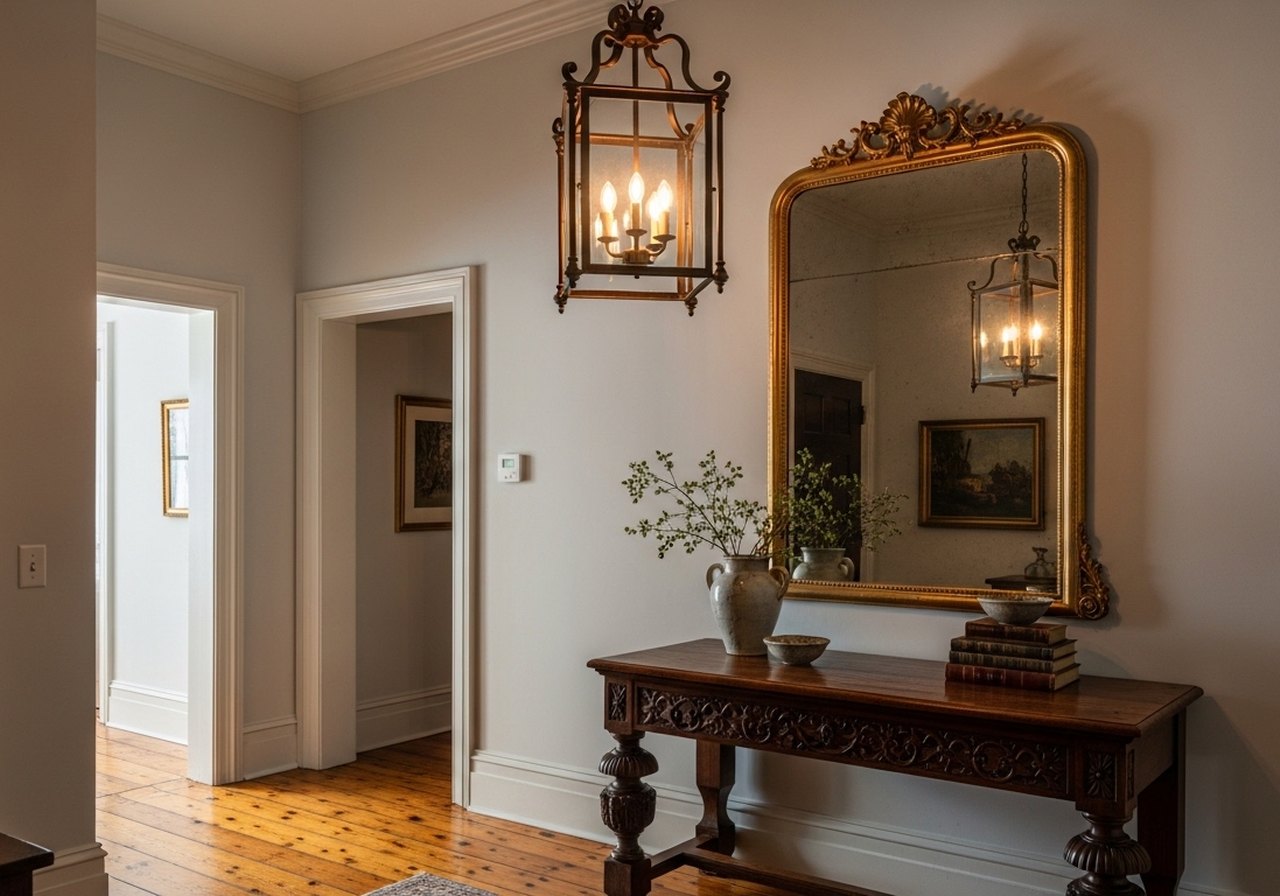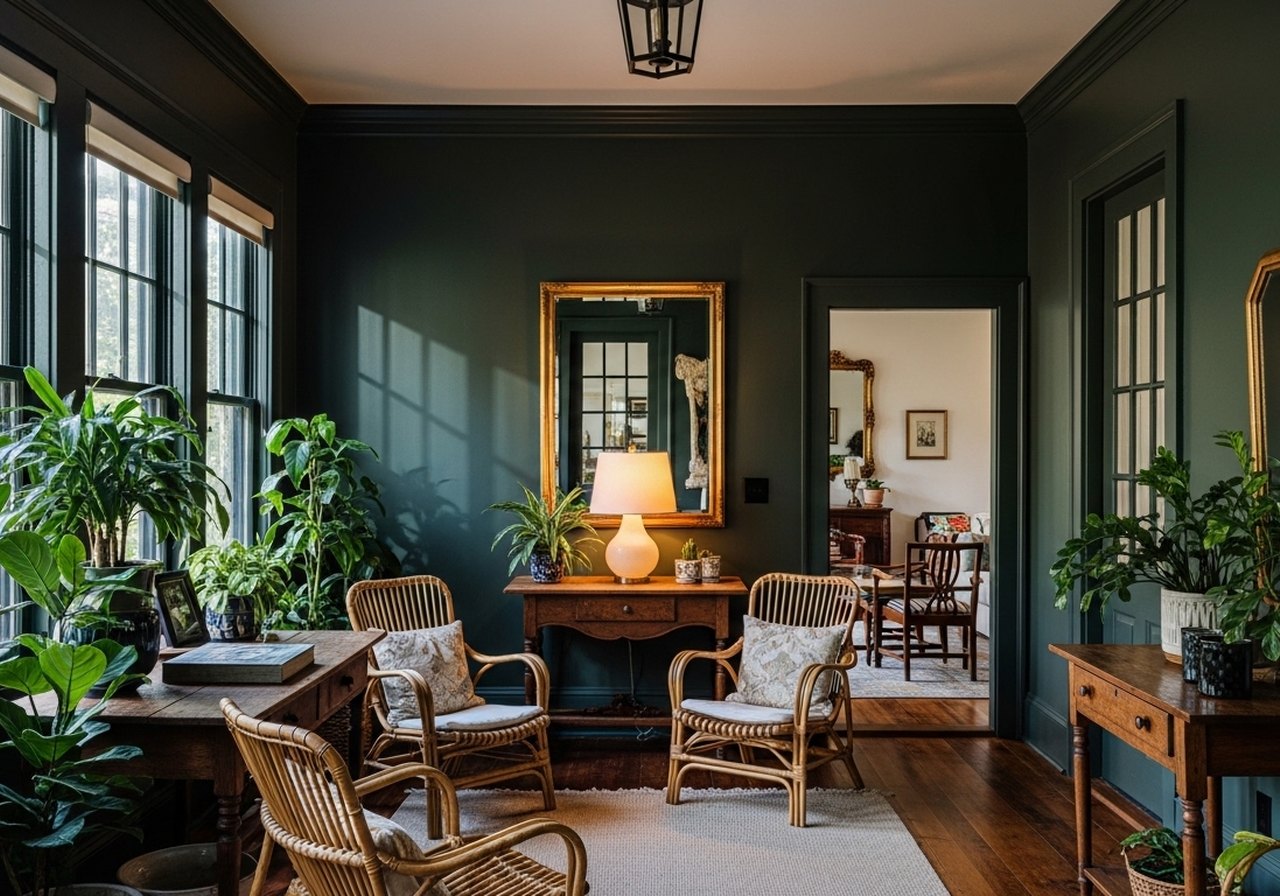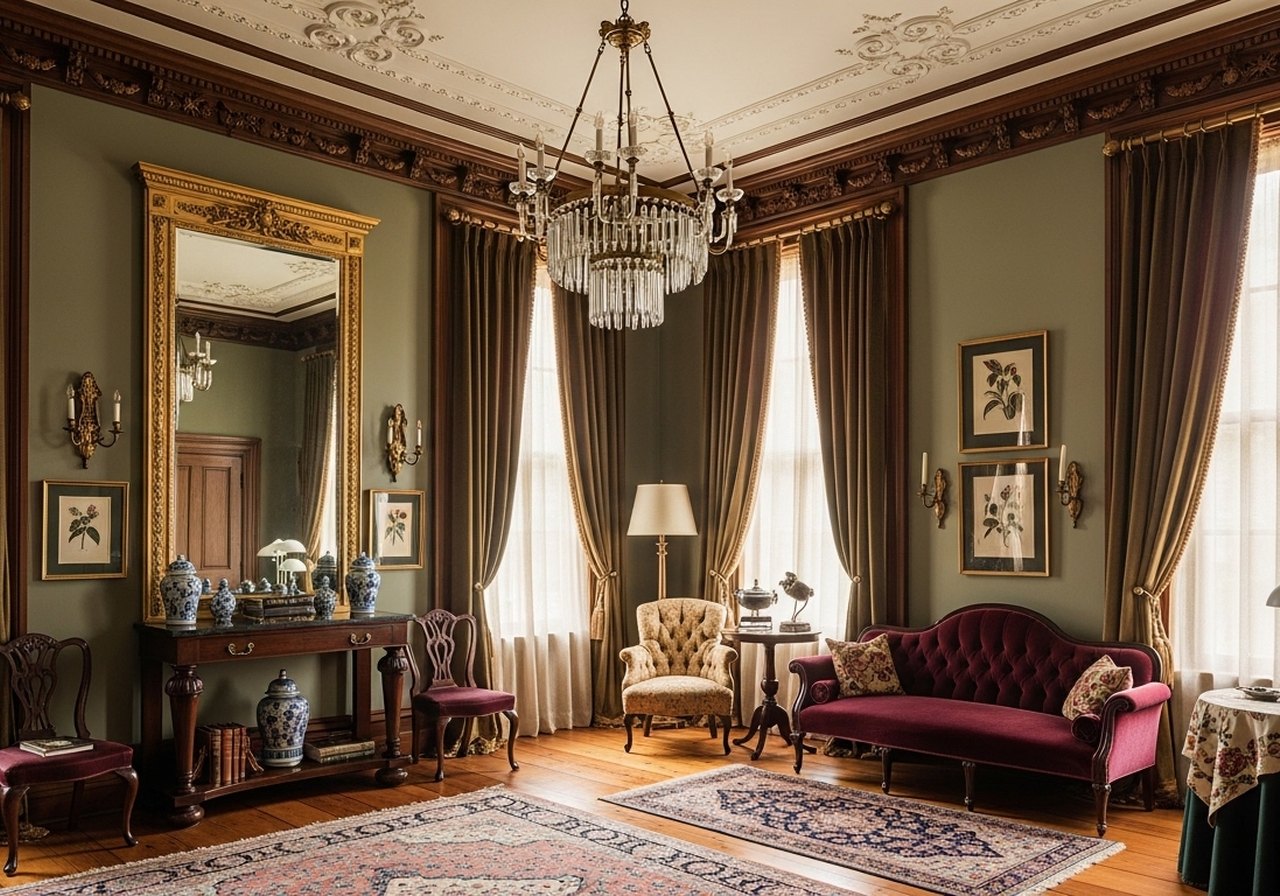
A master bedroom makeover that took four coats of paint, three lighting iterations and three months to get right is a documented case that good rooms require iteration and are not designed correctly the first time; ours came in around $4,500 and is finished now, in the sense that I have stopped changing it. The first version had white walls and the original overhead fixture, a flat institutional light that made the room a hotel in the bad sense; the fourth has a warm greige, a smaller fixture, articulating reading sconces aimed at the book instead of the eyes, and bedding and a rug that changed with it. This post is the four versions in order with what each got wrong, the blue that was lovely by day and oppressive by night, the pendant that was too large for the ceiling, the sconces angled wrong and the articulating ones that fixed it, the greige and the three weeks of second-guessing, why the bedroom took longest, the plug-in sconces in plaster walls, the overhead on a dimmer, 2700K throughout, the bedding and the rug as the last layer, the grasscloth that came after, what "finished" means, the order I would do it in now, the mistakes, and the cost.
Version one: white and the overhead
White walls, the original semi-flush with a frosted bowl, two table lamps on two nightstands, a bed frame and a rug from the last house; functional, fine, and not what we wanted. The light was flat and came from the ceiling, the lamps took the nightstands, and the room at 10 pm looked like the room at 10 am with the window dark. It was the room for a year because it worked, which is how bad rooms survive.
Version two: the blue, the pendant, the first sconces
Deep blue-grey walls, a new pendant in place of the overhead, reading sconces on either side of the bed; three good ideas, executed wrong. The color was lovely in daylight and felt oppressive at night, a cave with a bed in it. The pendant was 30 inches and correct by the formula in the sizing post and too large for a 10-foot ceiling over a bed, where it loomed from the pillow. The sconces were the right idea and the wrong execution: fixed cylinders that put the light in my eyes instead of on the book. Two months in version two, and the sconces were the thing that made it unlivable.
Version three: the swaps
The blue stayed, the pendant was swapped for a 22-inch fixture that sat a size under the formula, and the sconces were replaced with articulating arm models I could aim; better, and the room started to feel like a place I wanted to be. The articulating sconces are the one purchase from the whole makeover I would make again first: an arm that swings the light to the page and away from the sleeper is the difference between a bedroom two people can read in and one they cannot. Version three lasted a month, and the blue was the thing left.
Version four: the greige
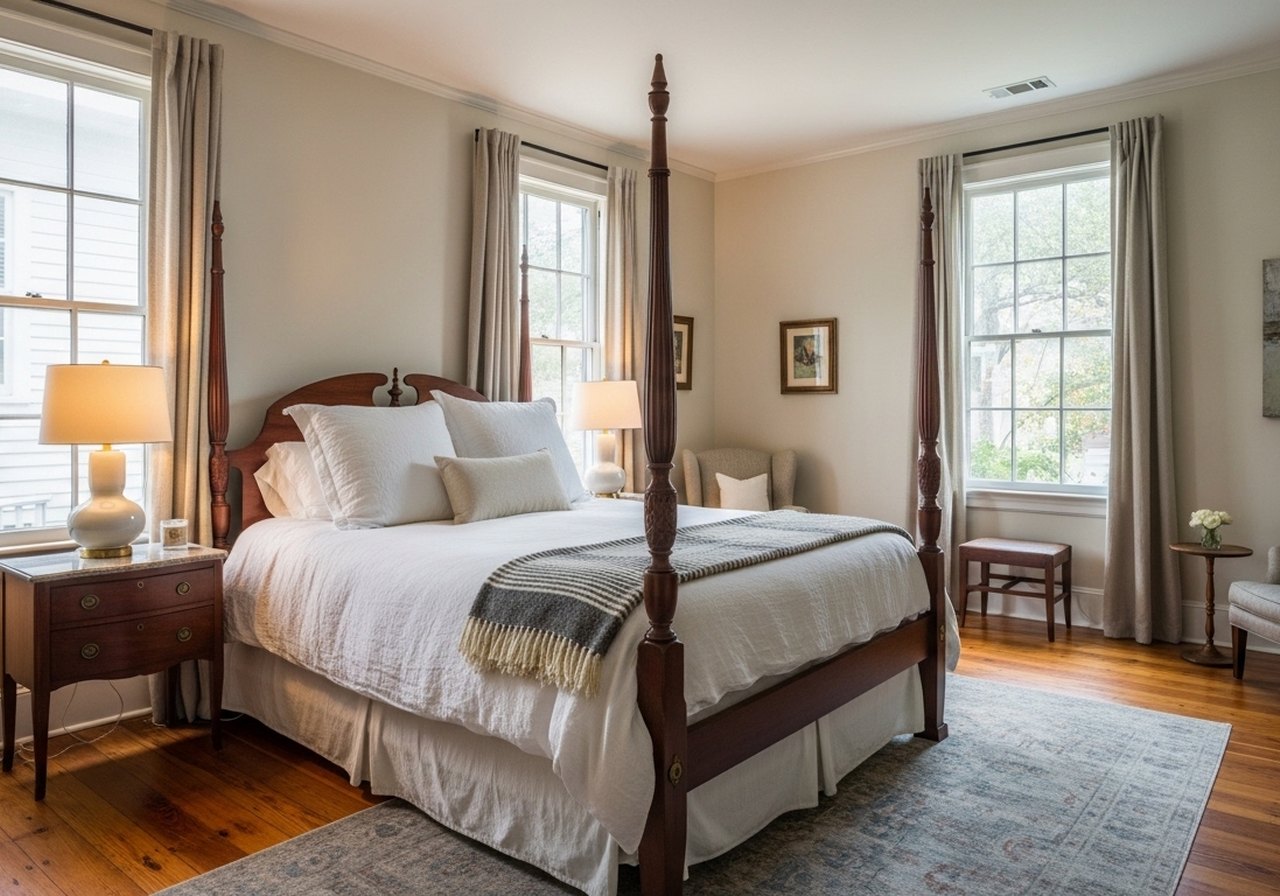
New paint, a warm greige, not grey and not beige but a color with a brown undertone that pulls warm under the sconces at night and reads as a soft stone by day; I spent three weeks second-guessing it on a 3-foot sample before committing and I now love it completely. The lighting stayed from version three. The bedding changed to white linen, the rug to a flat-weave wool in oatmeal, and the room stopped asking for anything. The paint post is the same three-week method in the living room, learned here.
Why the bedroom took longest
It had to balance storage, comfort and rest, and small things kept undermining the calm: the wrong bulb, a cluttered nightstand, light from the wrong angle, a color that changed its mind at dusk. A parlor is a room you look at and a bedroom is a room you lie in with your eyes half closed, and the things that are wrong in it are felt before they are seen. It took living in the room through three versions to learn what it needed, which is why it was the last room to come together and the one I would now do first in another house.
Light was the final piece
What finally settled the room: bedside sconces at eye level for reading, a soft overhead on a dimmer, and 2700K bulbs throughout; the detail that made the before and after look like two different houses was the bedroom wall lamps on either side of the bed, which freed both nightstands and changed the whole mood. The sconces made the room feel intentional in a way the paint could not, and the paint made the sconces' light look warm in a way the blue could not; the two were finished in the same week and neither was finished alone.
Plug-in sconces in plaster walls
Both sconces are plug-in, with cords run down behind the headboard in a painted cover to the outlets the bed hides, because the walls are horsehair plaster and opening them for two boxes was George and David and $600; at a glance the sconces are hardwired, and the switch is on the fixture where a hand finds it. The small bedroom post is the same solution in the room across the hall.
The overhead on a dimmer
The 22-inch fixture at 30 percent for the evening and 60 for making the bed, on a $22 dimmer, and never on after 9 pm; a bedroom's overhead is for the bed's making and the closet's finding and the evening belongs to the sconces. In version one it was the only light and at full, which is the whole of what was wrong with version one.
2700K throughout
Every bulb, the sconces, the overhead, the closet's strip, at 2700K, with warm-dimming bulbs in the sconces that go amber below 30 percent; version two had a 3000K bulb in the pendant that made the blue read colder at night than it did in the can, and the bulb was half of the blue's problem. A color is judged under the light it will live in, and the sample was judged under 2700K for the three weeks.
Bedding and rug, the last layer
White linen bedding and an oatmeal wool rug, chosen after the paint and the light because they are the layer that is seen against both; in version two the bedding was navy on blue walls and the room was a cave with a navy floor. The bedding is the largest soft surface in the room and it takes the sconces' light at night, and white linen under warm sconces is the reason the room glows at 20 percent.
The grasscloth that came after
A year after version four, the walls got grasscloth in a tone one shade warmer than the greige, per the grasscloth post, and the sconces' shades went to linen to match; it is version five, technically, and it is the version where I stopped, because the wall finally had a texture the sconces could light. It is the only change since, and it was an addition and not a correction.
What "finished" means
That I have stopped changing it, which is not the same as saying it was designed correctly the first time; it was not, and the record is above. A finished room is one where each thing in it has stopped asking for the next thing, and this room asked for three years. Good rooms require iteration, and the iterations cost less than the room would have cost if it had been left at version one for a decade.
The order I would do it now
Sconces first, articulating, plug-in, at 24 inches over the mattress; then the dimmer on the existing overhead; then 2700K in everything; then live a month. Then the paint, sampled under those lights for three weeks; then the fixture, a size under the formula; then the bedding and the rug; then, if the walls want it, the grasscloth. Light, then color, then fabric, which is the reverse of the order we did it in and the order the start-with-lighting post argues for every room.
Mistakes
A year of version one. The blue, judged by day. The 30-inch pendant over a bed. Fixed sconces that lit my face. A 3000K bulb. Navy bedding on blue walls. And doing the paint before the light, three times, which is the mistake the order above corrects.
What it cost
Four rounds of paint and samples, $520. Two fixtures, the too-large and the right one, $380 and $220. Two sets of sconces, the fixed and the articulating, $180 and $260. Dimmers, $50. Bedding, $340. The rug, $680. Bulbs, $30. About $2,660 in the room plus about $1,800 of the first two versions' furniture and mistakes, around $4,500 over three months, and the $260 articulating sconces are the line I would spend first.
The nightstands, cleared
Eighteen inches wide each, with a lamp on each in version one and nothing but a phone, a glass and a book on each in version four, because the sconces took the light off the table; a bedroom's nightstands are its most-used surfaces and the sconces are what made them usable. The rule now is the same as the kitchen counter's: three things, and the light is not one of them.
The closet and the dresser
A battery motion strip inside the closet along the top shelf, and a small puck under the dresser's edge, both 2700K, so getting dressed at 6 am while the other person sleeps is done without the sconces or the overhead; the two were added in version three, when the overhead's dimmer showed how much the morning had depended on the overhead. A bedroom's lighting has a morning and an evening, and the closet strip is the morning's.
The window and the light by day
A north window with wavy glass, a linen curtain with a blackout lining per the window post, and a room that by day is grey-soft and even, which is the light the greige was chosen in and the light the blue failed in. The bedroom's day is the window and its night is the sconces, and the paint had to work in both, which is what the three weeks of the sample were for.
The bed frame, which stayed
An iron bed from the last house, painted black, which was wrong with the blue and right with the greige, and which was the one object that survived all four versions; it is the reason the sconces are at 24 inches over its mattress and the reason the headboard hides two cords. A bed that stays through four versions is a bed that was right all along, and the walls were the thing that kept changing around it.
What the room is now, at 10 pm
Sconces at 20 percent, amber, aimed at two books; the overhead off; the greige and the grasscloth gone a warm brown in the sconces' light; white linen taking it; the nightstands clear; and nothing in the room asking for anything. It is the version I would have designed in week one if I had known, and the three versions before it are how I know, which is the only reason to write them down.
In one paragraph
White and an overhead, then blue and a pendant too big and sconces aimed wrong, then a smaller fixture and articulating sconces, then a warm greige that took three weeks to trust, then linen and wool, then grasscloth. Plug-in sconces at eye level with the switch on the fixture, the overhead at 30 on a dimmer, 2700K everywhere, and the nightstands clear. Three months, four coats, three lights, and a room that stopped asking.
Shop this post: bedroom wall lamps with an arm that aims