Unlacquered brass kitchen hardware is the right choice for a historic kitchen because it is the only common finish that looks better in forty years than it does on the day it is installed, and every hardware decision in our 1892 Charleston kitchen came down to that one question. Polished chrome will not look better in forty years. Brushed nickel probably will not. Unlacquered brass will, because it has no coating to fail; it darkens where hands touch it, holds its color where they do not, and takes on a depth that no plated finish can imitate. Ours ran $14 to $28 a pull from an importer working with a foundry in Portugal, and a year in it looks like it has always been in the room. This post covers what unlacquered brass actually is and how it differs from the finishes sold as brass, how the patina develops month by month, the maintenance question and the two honest answers to it, why we kept every piece of hardware in one family, matching the lighting to the hardware, weight and how to judge it, where we sourced it and what the alternatives cost, the places we did not use brass, the salt-air question in a coastal city, what the patina looks like at three months and at twelve, the one regret, and the full cost.
What unlacquered brass is, and what it is not
Solid brass with no clear coat: the metal is exposed, and the air and your hands do the finishing. Most hardware sold as "brass" is one of three other things. Lacquered brass is solid brass under a clear coating that keeps it bright until the coating scratches, at which point it patinas in streaks. Brass-plated is a thin layer of brass over zinc or steel, and it wears through to grey at the touch points within a few years. "Antique brass" and "aged brass" are factory finishes that imitate a patina and then stay exactly as they are. Only the unlacquered kind changes, and the change is the reason to buy it. Ask the seller directly whether the piece is solid and uncoated; a scratch test on a hidden edge with a fingernail should show brass all the way down and no clear film lifting.
How the patina develops
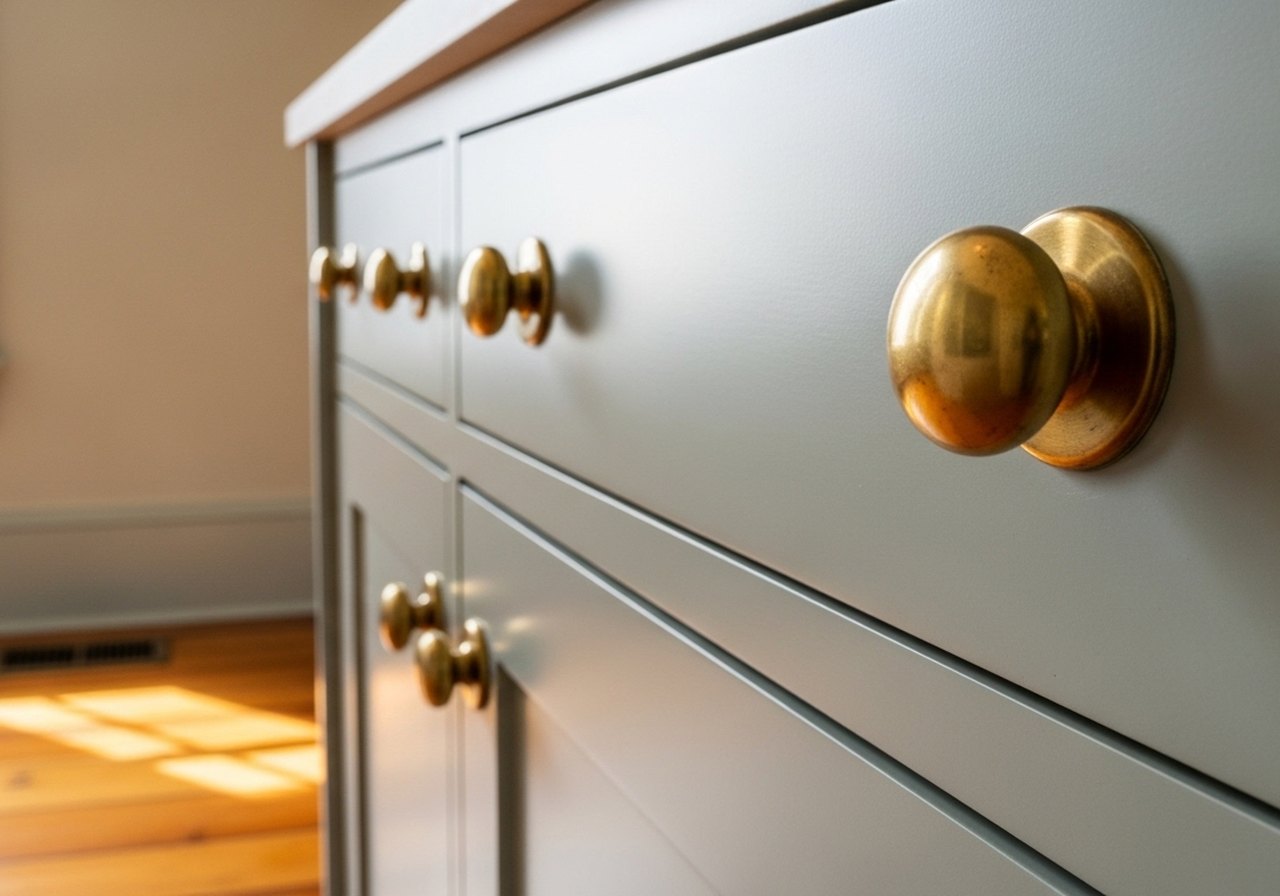
Week one, the pulls are bright and slightly brassy in a way I found alarming. By month one the edges you grip have gone a shade darker and the flat faces have lost their mirror. By month three the pulls on the most-used drawers, the one by the stove and the utensil drawer, are noticeably deeper in color than the ones on the pantry cabinet nobody opens, which is exactly right: the kitchen records its own use. At a year the whole set has settled into a warm, uneven bronze-gold with darker fingerprints at the centers, and the pantry pulls have finally caught up. It is not uniform and it is not supposed to be. Anyone who wants uniform should buy a lacquered finish and be happy with it.
The maintenance question
There are two honest answers, and both are fine. You can let it go entirely, as we have, and the patina does the maintenance; wipe it with a damp cloth when it is greasy and otherwise leave it alone. Or you can polish it back to bright with a brass polish and a soft cloth, which takes about a minute per pull and which some people do twice a year for the pleasure of it. What you should not do is wax or lacquer it after the fact to freeze it, because that produces a coated finish with the wear pattern of an uncoated one, and it looks like a mistake. The kitchen renovation post covers the rest of the room; the hardware is the part that needs no upkeep.
One family, one finish
Every pull, every knob, the hinges where they show, the faucet, the pot rail and the pendant canopies are unlacquered brass from the same two suppliers, and this was the second-best decision after the finish itself. Mixing metals in a kitchen reads as indecision; committing to one reads as taste, and in a house with original heart pine and plaster the eye already has enough to look at without three finishes arguing. If a piece cannot be had in unlacquered brass, we chose a different piece rather than a different finish. The one exception is the range, which is stainless because ranges are, and which reads as an appliance and not as hardware.
Matching the lighting
If you go brass on the hardware, go brass on the lighting, because the pendants over the island are the largest metal objects in the room and a nickel pendant over brass pulls is a room that cannot decide. Our island pendants are unlacquered brass with clear seeded glass, and they patina on the canopy where hands adjust them, in step with the pulls. The pendant height post has the mounting; the finish is what made the whole kitchen coherent, more than the cabinets did.
Weight, and how to judge it
A solid brass pull of 5 inches should weigh close to a quarter pound; pick one up and then pick up a stamped big-box pull of the same size, and the difference is the whole argument. Weight is not decoration. A heavy pull sits still when you open a drawer, does not rattle, and does not bend at the screw posts, which is what the cheap ones do within a year on a drawer that holds cast iron. The screws that come with good hardware are brass too and should be; a steel screw in a brass pull shows as a grey dot within months.
Where we sourced it, and the alternatives
An importer in Georgia who carries a Portuguese foundry's line, found through the same architectural salvage circles that produced our clawfoot tub; $14 to $28 a pull and $9 to $12 a knob, 34 pieces in all. The alternatives we priced: a well-known American maker at $38 to $60 a pull, which is the same metal at twice the price with a nicer box; a Chinese solid-brass line at $8 a pull that was solid but lighter and rougher at the edges; and the plated big-box option at $4, which we rejected on the first pull. The middle option is the one to look for, and it exists; it just is not in the hardware aisle.
Where we did not use brass
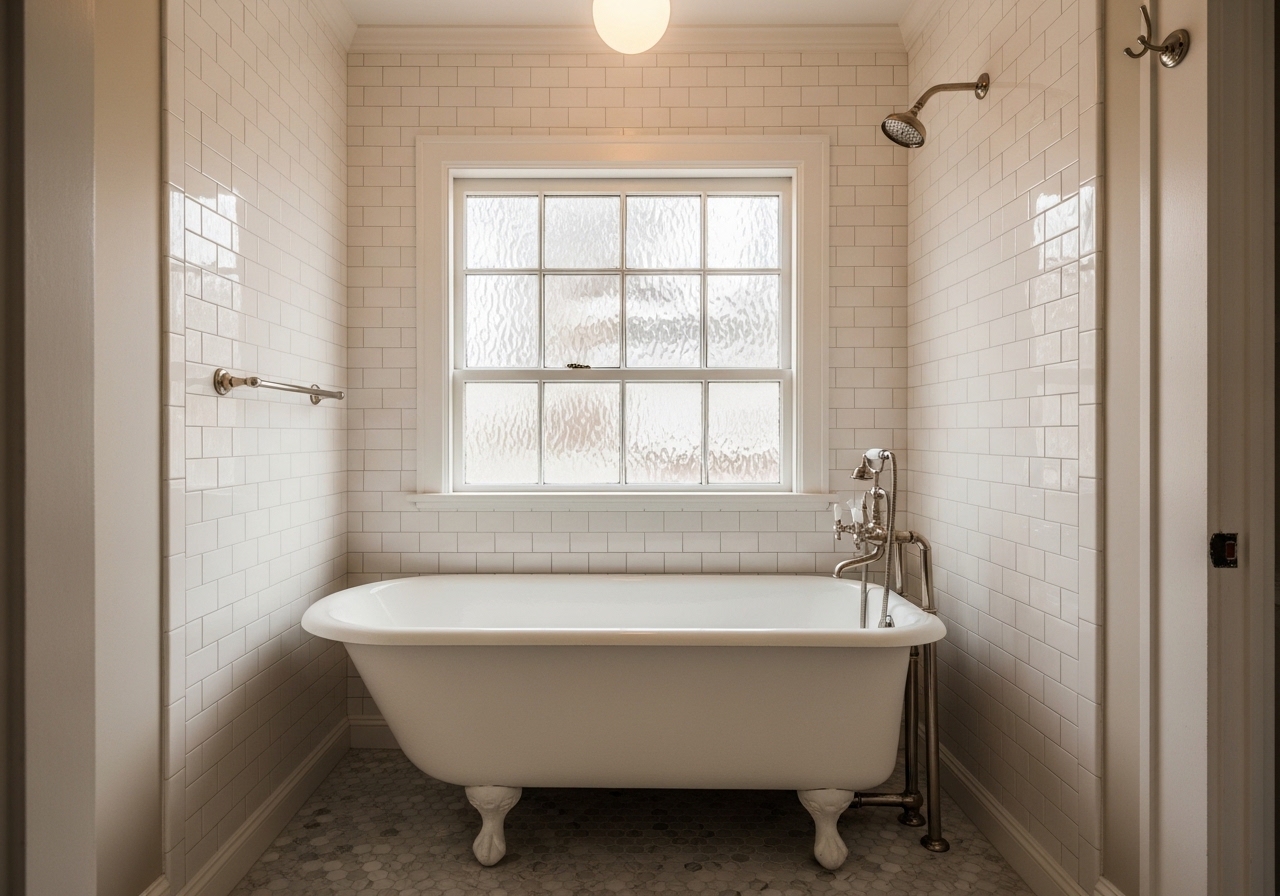
The bathroom, where the clawfoot tub's original hardware is nickel and we matched it; the bathroom post explains the choice. The exterior, where cast iron in black is what an 1892 facade wants. And the range hood, which is painted the wall color. Brass is the kitchen's metal, not the house's, and a house with one metal everywhere is a house that looks like a showroom. The rule is one finish per room and a reason for it.
The salt-air question
We are three blocks from the harbor, and the humid, salty air that rusts our piazza fixtures affects brass too: it patinas faster here than it would inland, and on the pieces nearest an open window it went darker in the first summer than the rest. It does not corrode, pit or fail; brass is what ships used for exactly that reason. If anything, coastal air is the ideal environment for unlacquered brass, because it does the aging in one year that a dry climate does in five. What it will not tolerate is a lacquered coating, which blisters at the seams in this humidity and is the reason the 1980s kitchen we inherited had streaked hardware.
The kitchen we inherited
A 1980s renovation, done cheaply: lacquered brass-look pulls that had blistered and gone green at the edges, on overlay cabinets that were an anachronism in an 1892 house. The pulls were the first thing I looked at and the first thing that told me the kitchen was going, because hardware is where a kitchen shows its age fastest and where a cheap decision is most visible. The new kitchen's hardware was chosen before the cabinets, and the cabinets were built to take it.
At three months and at twelve
Three months: the touch points darkened, the faces still mostly bright, the set reading as new hardware that has been used. Twelve months: the set reading as old hardware that has always been here, which is the goal, and which two guests have assumed was original to the house. It will keep going. At five years I expect the faces to be fully bronzed and the edges nearly brown, and at that point the kitchen's hardware will match the door hardware in the rest of the house, which is original and 130 years old, which is the reason for all of this.
The one regret
Not buying two spare pulls. One drawer was added in year one and the foundry's line had changed its casting slightly, and the new pull is a hair different in profile; it patinas the same and nobody but me has noticed, and I notice every day. Buy 10 percent over. It is the rule for tile and it is the rule for hardware.
What it cost
Thirty-four pieces of hardware, about $620. The faucet in unlacquered brass, $480. The pot rail, $110. The pendants' brass finish, no premium over the alternative. About $1,200 for every metal surface in the kitchen, in a finish that has no coating to fail and that will look better in the year the house turns 180 than it does now.
Choosing the profile for an 1892 kitchen
The finish was the easy half; the shape took longer. A kitchen in a single house had no fitted cabinets in 1892, so there is no "original" hardware to copy, and the honest choice is a profile that belongs to the period without pretending to be a survivor: a plain bin pull for the drawers, a round knob for the doors, a simple cup for the pantry. We rejected anything with a rope edge, a rosette or a Victorian flourish, which read as costume, and anything with a square modern bar, which reads as a condo. A plain pull in a heavy metal is the thing that looks right in a room with wainscoting and heart pine, because it makes no claim beyond being well made.
Installing it on inset doors
Our cabinets are inset, the doors flush in the frame the way they would have been built in a house of this age, and inset doors take hardware differently: the knob has to clear the frame when the door swings, and a bin pull on an inset drawer sits proud of the face by its full depth. We made a template from a scrap of plywood with the hole centers drilled, clamped it to each door, and drilled from the front through a piece of tape to stop the paint chipping. Thirty-four pieces took a Saturday. The one thing to do first is hang one knob and one pull on their doors and live with them for a week, because a pull that is a quarter inch too low on a drawer front is a thing you will see for the rest of the kitchen's life.
What a guest asks
Whether the hardware is original, first, which it is not and which is the compliment; then whether it is hard to keep clean, which it is not; then where it came from. The third question is the one this post answers, and the first is the reason to choose the finish. A kitchen in a 130-year-old house should look like it has been there a while, and unlacquered brass is the only thing you can buy new that agrees to do that.
In one paragraph
Solid brass, no coating, from a foundry that casts it heavy; every piece in one family, and the pendants to match; let it patina or polish it, but never coat it; buy 10 percent over; and choose it for a kitchen in a house that will outlive the finish, because it is the only finish that agrees to age with the house.
Shop this post: kitchen pendant lighting and brass and gold wall sconces to match the hardware